
 TonightOnScreen Catalog
Explore Movies • Drama
Search our curated catalog of cinema releases, binge-worthy series, and where to stream them.
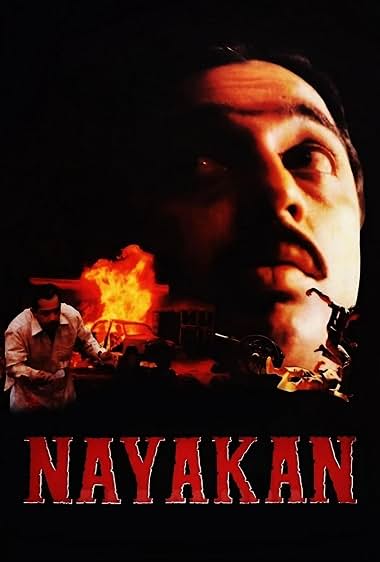
Nayakan
Written and directed by maestro Mani Ratnam and starring the legendary Kamal Haasan in an earth-shattering tour de force, Nayakan (1987) was India's official entry for the 60th Academy Awards, won three National Film Awards including Best Actor for Kamal Haasan and Best Cinematography for P.C. Sreeram, and was included in TIME Magazine's prestigious list of the All-Time 100 Greatest Movies. Drawing inspiration from Francis Ford Coppola's The Godfather and the real-life saga of legendary Mumbai underworld don Varadarajan Mudaliar, the film follows Sakthivelu 'Velu' (Kamal Haasan), an orphaned boy from Tamil Nadu who flees to the sprawling slums of Dharavi in Bombay after witnessing the murder of his union-leader father by corrupt police. Adopted by a Muslim smuggling family, Velu grows up witnessing the daily extortion, police brutality, and institutional neglect suffered by poor south Indian migrant communities in Mumbai. When an honest elderly resident is killed in custody, Velu retaliates by executing the corrupt police inspector, instantly becoming a revered Robin Hood-like savior, patriarch, and underworld don known as 'Velu Naicker'. Velu establishes a parallel court of justice, distributing wealth, shielding the oppressed, and funding healthcare and education. However, his life of violence demands a devastating moral and personal toll, resulting in the tragic murder of his beloved wife and the bitter alienation of his daughter Charumathi, who despises his criminal empire. Culminating in an emotionally shattering, ambiguous courtroom climax where his innocent young grandson asks: 'Are you a good man or a bad man?', and Velu tearfully whispers 'I don't know', Ilaiyaraaja's immortal soundtrack ('Thenpandi Cheemayile') and P.C. Sreeram's chiaroscuro lighting cement Nayakan as an immortal landmark of Indian cinema.
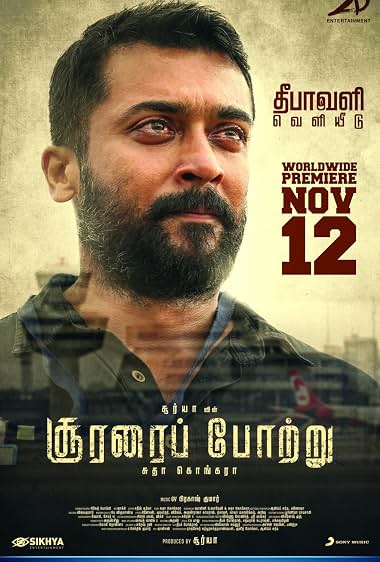
Soorarai Pottru
Directed by Sudha Kongara and co-written with Shalini Ushadevi, 2020's Tamil biographical drama Soorarai Pottru (Praise the Brave) triumphed at the 68th National Film Awards by winning five major awards, including Best Feature Film, Best Actor, Best Actress, Best Screenplay, and Best Background Score, celebrated globally as one of the most inspirational, emotionally resonant, and brilliantly directed Indian films of the century. Inspired by the real-life memoir Simply Fly: A Decan Odyssey by Captain G.R. Gopinath, the film chronicles the titanic, decade-long struggle of Nedumaaran 'Maara' Rajangam (superstar Suriya in a volcanic, career-defining performance of raw intensity, vulnerability, and unstoppable grit), a former Indian Air Force captain hailing from a humble rural village in Madurai. Traumatized by being unable to afford an expensive plane ticket to reach his dying father in time, Maara conceives an audacious, revolutionary dream: to shatter corporate airline monopolies and establish India's very first low-cost, budget airline where ordinary working-class citizens, farmers, and daily-wage laborers can fly for just ₹1. Maara faces ruthless corporate sabotage, bureaucratic red tape, and sabotage orchestrated by predatory luxury aviation tycoon Paresh Goswami (Paresh Rawal). He is fiercely supported by his equally ambitious, entrepreneurial wife Bommi (Aparna Balamurali in an Oscar-worthy performance of female strength and agency) and his resilient mother. Propelled by G.V. Prakash Kumar's fiery, emotionally charged musical score, Soorarai Pottru is an electrifying cinematic triumph celebrating the democratizing power of an unshakeable human dream.

Goodfellas
Martin Scorsese's 1990 tour de force Goodfellas is widely hailed as the definitive modern mob chronicle and a pinnacle of dynamic, kinetic American film grammar. Adapted from Nicholas Pileggi's non-fiction bestseller Wiseguy, the electrifying crime saga traces three decades in the exhilarating and degenerate life of Henry Hill (Ray Liotta in his crowning dramatic performance). Beginning with the famous opening line, 'As far back as I can remember, I always wanted to be a gangster,' the film immerses viewers into the opulent, seductive, and hyper-violent underworld of the Lucchese crime family in Brooklyn. Alongside his calculating mentor Jimmy 'The Gent' Conway (Robert De Niro) and the unhinged, psychopathic firebrand Tommy DeVito (Joe Pesci, who won the Academy Award for Best Supporting Actor for his explosive performance), Henry orchestrates lavish heists, including the historic Lufthansa robbery at JFK airport. However, as the 1970s slide into cocaine paranoia, betrayal, and federal crackdowns, Henry's glamorous empire spirals into a terrifying fight for survival. Featuring Michael Ballhaus's iconic, fluid Steadicam long-takes—including the legendary Copacabana tracking shot—Thelma Schoonmaker's razor-sharp rhythmic editing, and an exhilarating rock-and-roll soundtrack, Goodfellas redefined the mob genre forever.

Anbe Sivam
Directed by Sundar C. and brilliantly penned with philosophical genius and humanist wit by Kamal Haasan, Anbe Sivam (Love Is God, 2003) is universally cherished as one of the most culturally profound, intellectually stimulating, and emotionally touching masterpieces in the history of Indian cinema. Structured as an engaging road movie and ideological clash, the story begins at the flood-stranded Biju Patnaik Airport in Bhubaneswar, Odisha, where two completely opposite individuals are brought together by circumstance: Anbarasu (R. Madhavan in an exceptional comedic and dramatic turn), a handsome, arrogant, capitalistic commercial advertising director eager to return to Chennai for his lavish wedding, and Nallasivam 'Sivam' (Kamal Haasan in a sublime, physically transformative, and unforgettable performance), a scarred, limping, communist labor union leader with a paralyzed hand and a glass eye, possessing infectious optimism, wit, and empathy. When all flights and trains are canceled due to severe cyclonic floods, the reluctant duo embarks on an arduous, comical, and transformative journey across coastal India via buses, stranded freight trains, and ambulances. Through evocative flashbacks, Sivam's past is revealed: a charismatic, fiery street-theatre artist and revolutionary union activist who dared to fall in love with Balasaraswathi (Kiran Rathod), the daughter of a ruthless capitalist industrialist (Nassar), before surviving a horrific orchestrated bus crash that disfigured him. Touching upon communism, atheism, global capitalism, and human solidarity, Vidyasagar's poetic soundtrack and the tear-jerking climax at an Orissa train accident—where Sivam declares that anyone who wipes the tears of a dying fellow human being is God—cement Anbe Sivam as a timeless philosophical gem celebrating unconditional love.

City of God
Directed by Fernando Meirelles and co-directed by Kátia Lund from Bráulio Mantovani's adaptation of Paulo Lins's semi-autobiographical 1997 novel, City of God (Cidade de Deus, 2002) is universally heralded as a revolutionary landmark in world cinema, earning four historic Academy Award nominations including Best Director, Best Adapted Screenplay, Best Cinematography, and Best Film Editing. Set in the impoverished, violence-plagued favela of Cidade de Deus on the outskirts of Rio de Janeiro, Brazil, the sprawling non-linear epic traces the brutal evolution of organized crime, poverty, and teenage gang warfare across three volatile decades, from the late 1960s to the early 1980s. The narrative is chronicled through the perceptive eyes and camera lens of Rocket (Alexandre Rodrigues), a gentle, sensitive Afro-Brazilian youth who dreams of escaping the favela's cycle of poverty and early death to become a professional photojournalist. Rocket's journey contrasts sharply with that of his childhood contemporary, the demonic, psychopathic prodigy Li'l Zé (Leandro Firmino in an electrifying, terrifyingly charismatic performance), who ruthlessly murders rival drug dealers to establish an absolute cocaine monopoly over the favela alongside his loyal, level-headed enforcer Benny (Phellipe Haagensen). When Benny is killed, a brutal turf war erupts between Li'l Zé's gang and peaceful bus conductor Knockout Ned (Seu Jorge), whose family was brutally violated by Zé. Employing dizzying kinetic handheld camera movement, revolutionary jump-cuts, rapid-fire rhythmic editing, and non-professional actors drawn directly from Rio's favelas, César Charlone's golden-hued cinematography elevates City of God into a breathtaking, pulse-pounding, and heartbreaking sociological masterpiece that permanently transformed global cinematic visual language.

The Green Mile
Directed by Frank Darabont and adapted from Stephen King's serialized 1996 novel, The Green Mile stands as one of the most emotionally profound, spiritually transcendent, and universally acclaimed prison dramas in cinematic history. Set during the height of the Great Depression in 1935 at Cold Mountain Penitentiary in Louisiana, the film follows Paul Edgecomb (Tom Hanks in a deeply humane, compassionate performance), a veteran death row corrections officer who oversees 'The Green Mile'—the lime-colored corridor leading condemned men to the electric chair. Paul's cynical worldview and agonizing chronic ailment are overturned with the arrival of John Coffey (Michael Clarke Duncan in an unforgettable, Oscar-nominated breakthrough of gentle vulnerability), a towering, mild-mannered Black man convicted of the horrific rape and murder of two young sisters. Edgecomb and his empathetic fellow guards quickly discover that Coffey possesses an inexplicable, miraculous supernatural power to heal disease, absorb human suffering, and breathe life back into the dead, notably resurrecting a beloved pet mouse named Mr. Jingles. As Coffey's innocent, saint-like nature becomes unmistakably evident, Edgecomb is plunged into an agonizing moral crisis, grappling with the devastating tragedy of executing a true miracle of God in an unjust world. Nominated for four Academy Awards including Best Picture, The Green Mile blends supernatural allegory, tragic racial injustice, and heartbreaking empathy to deliver an unforgettable masterwork on the cruelty of human society and the enduring grace of the human spirit.

Saving Private Ryan
Steven Spielberg's 1998 war epic Saving Private Ryan redefined combat realism in cinema history, capturing five Academy Awards including Best Director and grossing over $482 million worldwide. The film opens with an unforgettable, visceral 27-minute depiction of the Allied invasion of Normandy on Omaha Beach on D-Day (June 6, 1944). Filmed with handheld 45-degree shutter cameras, de-saturated colors, and sickening acoustic design, Spielberg placed audiences directly into the chaos, dismemberment, and terror endured by American soldiers under merciless German machine-gun fire. In the aftermath of the slaughter, Army Ranger Captain John H. Miller (Tom Hanks in a deeply moving, understated performance) is ordered by General George C. Marshall to lead an eight-man squad deep behind enemy lines in Normandy to locate and extract Private James Francis Ryan (Matt Damon), whose three brothers have all been killed in action within days of each other. As the squad navigates deadly sniper ambushes and moral arguments about risking eight lives to save one, Miller reveals his quiet past as a schoolteacher, culminating in a ferocious defense of a strategic bridge in Ramelle. Hanks's dying whisper, 'Earn this... earn it,' remains one of the most haunting emotional climaxes in world cinema.

The Silence of the Lambs
Jonathan Demme's 1991 psychological horror thriller The Silence of the Lambs is one of only three films in Academy Awards history to sweep the prestigious 'Big Five' Oscars: Best Picture, Director, Actor, Actress, and Adapted Screenplay. Jodie Foster stars with fierce, vulnerable brilliance as Clarice Starling, an ambitious FBI trainee assigned by Behavioral Science head Jack Crawford (Scott Glenn) to interview the notorious, imprisoned forensic psychiatrist and cannibalistic serial killer Dr. Hannibal Lecter (Anthony Hopkins in an immortal, terrifying 16-minute performance). The FBI seeks Lecter's morbid psychological insights to track down 'Buffalo Bill' (Ted Levine), a depraved killer who kidnaps and skins young women. Lecter engages Starling in a treacherous game of quids pro quo, trading behavioral clues for intimate disclosures of her childhood trauma and the haunting screams of slaughtered spring lambs. Demme's claustrophobic direct-to-camera close-ups, Tak Fujimoto's clinical cinematography, and Hopkins's razor-sharp, chilling intellect created the definitive standard for modern psychological thrillers. A masterclass in suspense, gender dynamics, and forensic deduction, The Silence of the Lambs remains an unassailable benchmark of cinematic art.

Maharaja
Written and directed with mind-bending non-linear screenwriting brilliance by Nithilan Saminathan, 2024's Tamil revenge thriller Maharaja marked superstar Vijay Sethupathi's monumental 50th career feature film, becoming an explosive commercial blockbuster grossing over ₹107 crore worldwide and a massive international streaming sensation. The narrative centers on Maharaja (Vijay Sethupathi in a career-defining tour de force of quiet stoicism, tender paternal love, and terrifying physical fury), an unassuming, middle-aged Chennai barber who lives a humble existence with his school-going daughter Jothi. Maharaja's life was scarred years earlier when a truck crashed through his home, killing his wife while an empty iron dustbin miraculously fell over infant Jothi, saving her life; consequently, the family cherishes the metal dustbin, affectionately naming it 'Lakshmi'. One day, a battered and bruised Maharaja walks into the local police station with a bizarre complaint: three masked burglars broke into his home, assaulted him, and stole 'Lakshmi' the dustbin. Mocked and dismissed by corrupt police inspectors Varadhan (Natty Natraj) and his colleagues, Maharaja refuses to leave, offering a ₹5 lakh bribe to retrieve the seemingly worthless item. As the police scheme to manufacture a fake identical dustbin to pocket the cash, Nithilan's intricate non-linear narrative reveals the horrifying, heartbreaking reality: the burglary was a cover story concealing a monstrous home-invasion sexual assault perpetrated against his teenage daughter by ruthless serial criminal Selvam (filmmaker Anurag Kashyap in a terrifying, depraved villainous role). Featuring Philomin Raj's razor-sharp editing, B. Ajaneesh Loknath's haunting score, and an emotionally gut-wrenching climax, Maharaja is a modern thriller masterpiece.

Kumbalangi Nights
Directed by Madhu C. Narayanan in a sensational directorial debut and written by the master screenwriting architect Syam Pushkaran, 2019's Malayalam family drama Kumbalangi Nights is universally cherished as a modern cinematic triumph of Indian cinema, winning four Kerala State Film Awards and earning international critical adulation for its progressive, empathetic, and groundbreaking deconstruction of toxic masculinity and patriarchal family structures. Set against the serene, backwater island fishing village of Kumbalangi near Kochi, the story revolves around four estranged, dysfunctional half-brothers living together in a dilapidated, unfinished house devoid of a mother: hot-tempered eldest brother Saji (Soubin Shahir in a deeply moving, emotionally transcendent performance of grief, vulnerability, and redemption), rebellious and jobless young drifter Bobby (Shane Nigam in a charismatic, naturalistic turn), mute and gentle school-dropout Bonny (Sreenath Bhasi), and school-going youngest brother Frankie. The brothers share a tense, combative household characterized by emotional alienation and domestic squalor. However, when Bobby falls in love with Baby (Anna Ben in a sparkling debut), an obstacle emerges in the form of Baby's brother-in-law Shammi (superstar Fahadh Faasil in an unforgettable, chillingly brilliant performance of fragile hyper-masculinity and patriarchal vanity, famous for admiring his own mustache in the mirror as 'The Complete Man'). Shammi's authoritarian, psychopathic control over the household forces the four broken brothers to overcome their differences, welcome outsiders, and forge a genuine, loving family founded on mutual respect rather than bloodline purity. Elevated by Sushin Shyam's soul-stirring, atmospheric musical landscape ('Cherathukal') and Shyju Khalid's painterly, luminous cinematography capturing the bioluminescent waters of Kumbalangi, Kumbalangi Nights is an emotionally resonant, timeless masterpiece celebrating warmth, brotherhood, and mental health.
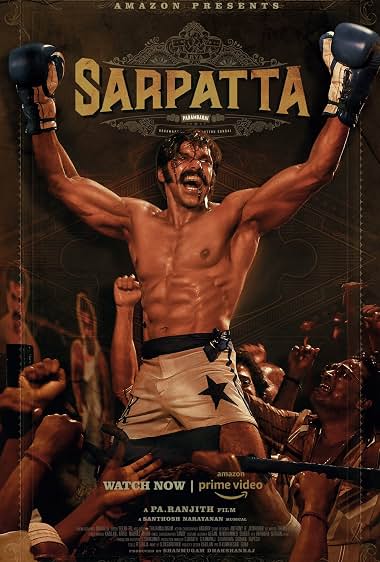
Sarpatta Parambarai
Directed and co-written by visionary filmmaker Pa. Ranjith alongside novelist Tamil Prabha, 2021's Tamil sports period drama Sarpatta Parambarai is widely celebrated as one of the greatest, most authentic, and politically astute boxing epics in world cinema, earning universal critical acclaim and a massive global following upon its release on Amazon Prime Video. Set in the vibrant, subaltern working-class harbor neighborhoods of North Madras during the tumultuous Emergency era of the mid-1970s, the film delves deep into the rich, ancestral boxing rivalry between two historic subaltern clans: the indigenous Sarpatta Parambarai and the aristocratic Idiyappa Parambarai. When Sarpatta's revered coach Rangan Vaathiyar (Pasupathy in a career-best, quietly dignified masterclass of theatrical gravitas) is humiliated in the ring by the seemingly invincible Idiyappa champion Vembuli (John Kokken), he issues a desperate public ultimatum: a Sarpatta boxer will dethrone Vembuli in the next bout, or the Sarpatta clan will disband forever. Stepping up to defend the honor of his clan is Kabilan (Arya in an astonishing, physically monumental transformation of sweat, blood, and emotional vulnerability), a harbor coolie and son of a deceased boxer who has trained in secret due to his mother's trauma over ring violence. Mentored by Rangan, Kabilan defeats ferocious contenders like Dancing Rose (Shabeer Kallarakkal) before personal success, political corruption, and alcoholism threaten to destroy his life. Kabilan's arduous path to redemption—undergoing grueling old-school physical training on the coastal sands of Madras—leads to an earth-shattering boxing final. Elevated by Santhosh Narayanan's electrifying background score and Murali G.'s authentic 1970s period recreation, Sarpatta Parambarai is an exhilarating triumph on dignity, working-class resilience, and social justice.
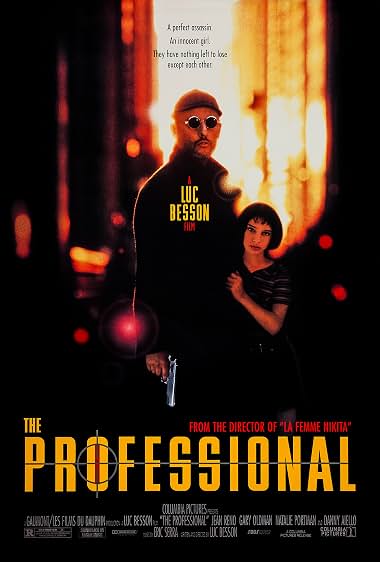
Léon: The Professional
Written and directed by visionary French filmmaker Luc Besson in his thrilling English-language debut, Léon: The Professional (1994) is an iconic, emotionally poignant, and stylistically electrifying neo-noir crime thriller that redefined international action cinema. Set in the gritty, atmospheric urban labyrinth of New York City's Little Italy, the narrative centers on Léon Montana (Jean Reno in an unforgettable, melancholic tour de force), an illiterate, solitary Italian hitman—or 'cleaner'—who lives a spartan, disciplined life drinking milk, caring tenderly for a potted aglaonema plant, and executing high-risk underworld contracts with silent, lethal precision for mob boss Tony (Danny Aiello). Léon's carefully isolated, monastic existence is permanently upended when the family of his neglected 12-year-old apartment neighbor, Mathilda Lando (Natalie Portman in an extraordinary, star-making cinematic debut of astounding maturity and emotional depth), is ruthlessly massacred in a corridor drug dispute by psychotic, Beethoven-worshiping, pill-popping DEA agent Norman Stansfield (Gary Oldman in one of the most explosive, terrifyingly charismatic villainous performances in screen history, roaring 'Bring me everyone... EVERYONE!'). Léon reluctantly opens his door to shelter the traumatized girl, leading to a tender, unorthodox surrogate bond where Mathilda teaches Léon to read and feel, while Léon trains her in the deadly mechanics of weaponry so she can avenge her murdered four-year-old brother. Featuring Thierry Arbogast's dynamic widescreen cinematography and Eric Serra's atmospheric score, Léon: The Professional culminates in an earth-shattering tactical siege that cements its status as a timeless action-drama classic celebrated for its heart and explosive thrills.