
 Curated Genre Showcase
Drama
Narrative fiction or semi-fiction with in-depth character development.

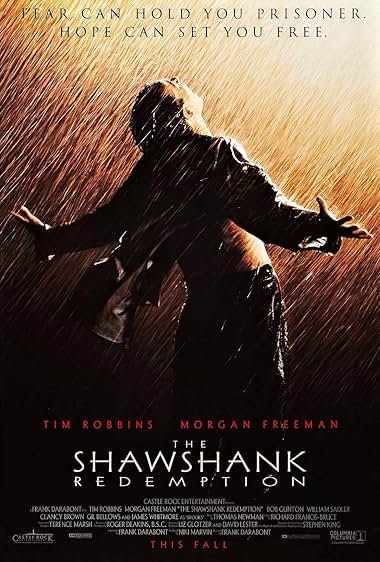
The Shawshank Redemption
"Fear can hold you prisoner. Hope can set you free."
Consistently voted by film lovers worldwide as the greatest movie ever made on the IMDb Top 250, Frank Darabont's The Shawshank Redemption is a transcendent, deeply inspiring dramatic tour de force adapted from Stephen King's beloved novella Rita Hayworth and Shawshank Redemption. The film follows Andy Dufresne (Tim Robbins), a quiet, cerebral New England banker who is wrongfully convicted of the brutal double murder of his adulterous wife and her lover in 1947 and sentenced to two consecutive life terms inside the grim, monolithic walls of Shawshank State Penitentiary in Maine. Over two decades of soul-crushing incarceration, Andy endures sadistic beatings from inmates and institutional cruelty from the hypocritical, bible-thumping Warden Samuel Norton and sadistic Captain Byron Hadley. Rather than surrendering to despair, Andy preserves his inner dignity, utilizing his sharp financial acumen to gain protection and orchestrating an underground library for his fellow prisoners. He forms an immortal, life-affirming bond of brotherhood with Ellis 'Red' Redding (Morgan Freeman in his definitive, soulful role as narrator and contraband procurer). A majestic meditation on resilience, redemption, patience, and the unquenchable power of the human spirit, the film's euphoric, rain-drenched climax remains cinema's ultimate symbol of freedom.
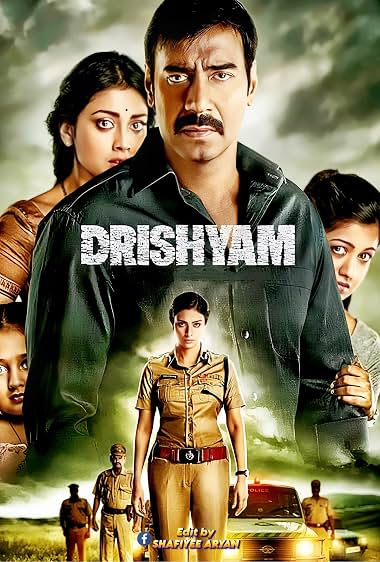
Drishyam
Directed by the late Nishikant Kamat, the 2015 Hindi suspense thriller Drishyam is celebrated as one of the sharpest, most gripping mystery masterclasses in Indian cinematic history. Adapted from Jeethu Joseph's legendary Malayalam original, the film stars Ajay Devgn as Vijay Salgaonkar, an uneducated, street-smart cable television operator and devoted family man living in a quiet Goan village. Vijay's peaceful life is shattered when an arrogant boy named Sameer—the only son of Goa's ruthless Inspector General of Police Meera Deshmukh (a formidable, steely Tabu)—blackmails Vijay's teenage daughter Anju with illicit camera footage. During a late-night confrontation, Sameer is accidentally killed by the family in self-defense. Drawing upon his encyclopedic knowledge of cinema thrillers, Vijay orchestrates an audacious, foolproof alibi around the dates of October 2nd and 3rd, conditioning his family to withstand brutal third-degree police interrogation while hiding the body under the very foundation of the police station itself. A riveting psychological chess match between a desperate father and an implacable mother, Drishyam achieved cult classic status and huge commercial success. Celebrated for its tight narrative pacing and peerless screenwriting, Drishyam became a widespread cultural reference point across India for police procedure and tactical alibis. Ajay Devgn's restrained, simmering performance and Tabu's ferocious maternal grief turned this psychological thriller into an enduring cult classic that continues to captivate mystery enthusiasts.
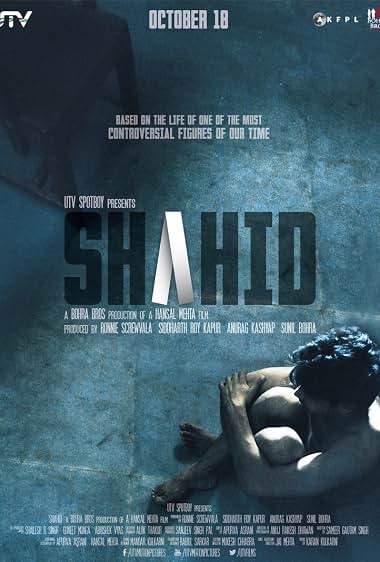
Shahid
Directed by Hansal Mehta, the 2013 biographical legal drama Shahid premiered at the Toronto International Film Festival and won two prestigious National Film Awards—Best Director for Mehta and Best Actor for Rajkummar Rao—standing as a watershed moment in modern Indian independent cinema. The film dramatizes the extraordinary, tragic life of Shahid Azmi, a human rights activist and lawyer who was assassinated in Mumbai in 2010 at age 32. Traumatized as a teenager by the 1992 Bombay riots, Shahid flees to Pakistan-administered Kashmir to join a militant camp, only to be disgusted by their brutality and escape. Falsely arrested under anti-terror laws (TADA), Shahid spends seven grueling years in Delhi's Tihar Jail, where an enlightened fellow inmate encourages him to complete his education. Upon release, Shahid earns his law degree and dedicates his practice to providing pro-bono defense for impoverished, wrongfully detained Muslim youth accused of terrorism without evidence. Facing violent court assaults, hate mail, and death threats, Shahid's unyielding belief in the Indian Constitution costs him his life. Rajkummar Rao's raw, unvarnished performance remains one of the finest acting achievements in Indian cinema.

Barfi!
Barfi! is an iconic cinematic work starring Priyanka Chopra Jonas as Jhilmil Chatterjee.
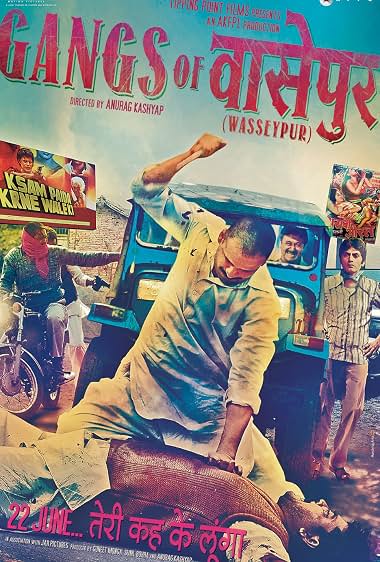
Gangs of Wasseypur
Screened in its full 321-minute glory at the 2012 Cannes Film Festival's Directors' Fortnight, Anurag Kashyap's two-part magnum opus Gangs of Wasseypur is widely heralded as the definitive Indian gangster epic and a monumental masterclass in visceral, gritty, realistic cinema. Spanning seven decades from the 1940s to the 2000s in the coal-mining town of Wasseypur in Dhanbad, Bihar (now Jharkhand), the sprawling saga chronicles a savage, multi-generational blood feud between the Qureshi clan and Shahid Khan's family. Manoj Bajpayee delivers a powerhouse, career-defining performance as Sardar Khan, a lustful, fearless mafia don determined to avenge his father's death by destroying ruthless coal baron and corrupt politician Ramadhir Singh (Tigmanshu Dhulia). When Sardar is gunned down in a petrol pump ambush, his soft-spoken, pot-smoking second son Faizal Khan (a breakout, star-making turn by Nawazuddin Siddiqui) transforms into a terrifying, cold-blooded king of violence. Boasting Sneha Khanwalkar's eclectic folk-rock soundtrack and dialogue that permanently embedded itself into Indian pop culture, Wasseypur redefined the grammar of modern Indian independent cinema. Universally celebrated by international film critics for its visceral realism and unflinching dark comedy, Gangs of Wasseypur remains a monumental cinematic textbook studied in film academies globally. Its brilliant ensemble cast, authentic dialect, and ruthless deconstruction of Indian political violence established Anurag Kashyap among the world's most daring independent auteurs.
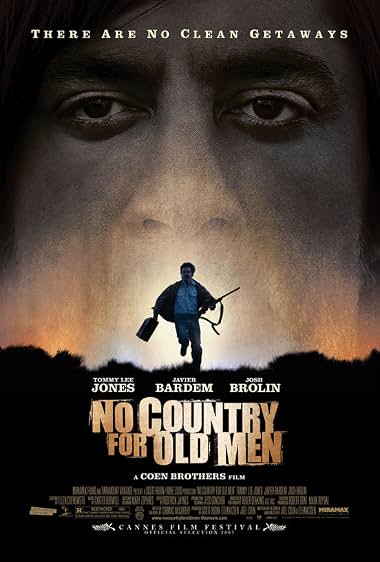
No Country for Old Men
Directed, written, and edited by Joel and Ethan Coen based on Cormac McCarthy's bleak 2005 novel, No Country for Old Men swept four Academy Awards including Best Picture, Best Director, and Best Adapted Screenplay, widely acknowledged as the greatest modern neo-Western crime thriller of the twenty-first century. Set against the desolate, sun-bleached scrubland of 1980 West Texas, the cataclysmic narrative is ignited when welder and Vietnam veteran Llewelyn Moss (Josh Brolin) stumbles upon the bloody aftermath of a desert drug shootout gone wrong, discovering a pickup truck loaded with heroin and a leather satchel containing $2.4 million in cash. Moss's fateful decision to abscond with the fortune unleashes Anton Chigurh (Javier Bardem in a chilling, Oscar-winning portrayal of psychotic sociopathy), an unstoppable hitman who executes victims with a captive bolt pistol, speaks in eerie philosophical paradoxes, and decides human lives on the flip of a coin. As Moss desperately evades Chigurh across dusty roadside motels, weary aging Sheriff Ed Tom Bell (Tommy Lee Jones) investigates the escalating carnage, lamenting his inability to comprehend or combat the senseless, remorseless wave of modern violent evil. Devoid of a traditional musical score and shot with stark, breathtaking precision by Roger Deakins, No Country for Old Men is an unyielding, haunting meditation on fate, mortality, and the terrifying randomness of human existence.
There Will Be Blood
Written, directed, and co-produced by American auteur Paul Thomas Anderson and loosely inspired by Upton Sinclair's 1927 novel Oil!, There Will Be Blood (2007) is widely heralded by international film critics, historians, and scholars as the single greatest cinematic achievement of the twenty-first century, winning two Academy Awards for Best Actor and Best Cinematography. The film charts the ruthless, monstrous rise of Daniel Plainview (Sir Daniel Day-Lewis in an astounding, Oscar-winning tour de force of terrifying gravitas and unhinged physical immersion), a solitary silver prospector who transforms himself into an all-powerful, predatory oil tycoon in the barren frontier scrubland of turn-of-the-century California. Posing as a wholesome family businessman alongside his adopted orphaned son H.W., Plainview travels to the impoverished town of Little Boston to swindle devout ranchers out of drilling rights over immense subterranean petroleum reserves. Plainview's obsessive, misanthropic thirst for wealth and absolute autonomy—famously declaring: 'I have a competition in me. I want no one else to succeed. I hate most people'—brings him into apocalyptic ideological warfare with charismatic young evangelical preacher Eli Sunday (Paul Dano in an equally brilliant performance of narcissistic religious zeal). As roaring wooden oil derricks burst into fiery geysers and Plainview's soul curdles into paranoid isolation, their conflict escalates to a horrific, bowling-alley confrontation: 'I drink your milkshake! I drink it up!' Lensed with stark epic majesty by Robert Elswit and propelled by Jonny Greenwood's dissonant, percussive orchestral score, There Will Be Blood is an unyielding American tragedy dissecting capitalism, faith, and greed.

Pan's Labyrinth
Written and directed by Mexican visionary auteur Guillermo del Toro, Pan's Labyrinth (El laberinto del fauno, 2006) stands as one of the most visually stunning, emotionally haunting, and critically revered dark fantasy masterworks in cinema history, earning six Academy Award nominations and winning three Oscars for Best Cinematography, Best Art Direction, and Best Makeup. Set in 1944 in the lush, suffocating mountain forests of northern Spain during the early Francoist dictatorship, the story centers on Ofelia (Ivana Baquero in a luminous, deeply empathetic breakthrough), a quiet, book-loving ten-year-old girl who travels with her pregnant, ailing mother Carmen to an isolated military outpost. There, they reside under the iron fist of her new stepfather, Captain Vidal (Sergi López in a chillingly sadistic, sociopathic portrayal of fascist brutality), who is ruthlessly hunting down anti-fascist republican Maquis rebels hiding in the surrounding hills. Seeking psychological and spiritual refuge from Vidal's horrifying violence, Ofelia is led by an insect fairy into the crumbling stone heart of an ancient, moss-covered subterranean labyrinth. There she encounters the enigmatic, towering Faun (Doug Jones under astonishing practical makeup), who reveals that she is Princess Moanna, the lost daughter of the underground realm. To reclaim her immortal kingdom and royal lineage before the full moon rises, Ofelia must complete three perilous, mythic trials—confronting a colossal woodland toad, evading the terrifying, child-devouring Pale Man with eyeballs embedded in his palms, and making the ultimate moral choice between selfish survival and innocent sacrifice. Interweaving stark historical horror with poetic fairy-tale allegory, Javier Navarrete's melancholic lullaby score, and del Toro's peerless monster design, Pan's Labyrinth is an unforgettable cinematic masterpiece on disobedience, grace, and innocence.


Batman Begins
Christopher Nolan's 2005 triumph Batman Begins wiped away the stilted, campy excess of previous comic book adaptations, establishing a revolutionary, grounded hyper-realism that fundamentally reshaped modern superhero filmmaking. Christian Bale stars with fierce intensity as Bruce Wayne, a traumatized billionaire heir haunted by childhood guilt over the street murder of his parents in Gotham City. Wandering the globe to understand the criminal mind, Bruce is recruited in an Asian prison by the mysterious Henri Ducard (Liam Neeson) and trained in the brutal, ninja martial arts of the League of Shadows under Ra's al Ghul. Rejecting the League's genocidal plan to purge corrupt Gotham, Bruce returns home to weaponize fear against criminals. Aided by his loyal butler Alfred Pennyworth (Michael Caine), Wayne Enterprises tech innovator Lucius Fox (Morgan Freeman), and honest cop Jim Gordon (Gary Oldman), Bruce constructs his batsuit, tumbler batmobile, and symbolic vigilante persona. When corrupt psychiatrist Dr. Jonathan Crane / Scarecrow (Cillian Murphy) and the true Ra's al Ghul weaponize a hallucinogenic fear toxin to drive Gotham into insane civil war, Batman rises to save his city. Featuring Hans Zimmer and James Newton Howard's iconic score, Batman Begins stands as a monumental genesis of modern cinema.
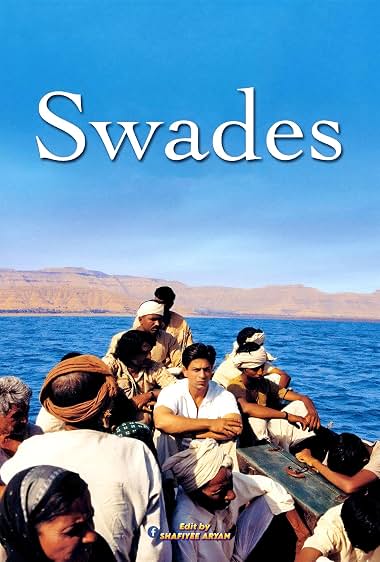


The Truman Show
Peter Weir's brilliant, prophetic 1998 satirical dramedy The Truman Show predicted the omnipresent voyeurism of modern reality television, 24/7 digital surveillance, and curated online reality with uncanny prescience. Jim Carrey delivers an extraordinary, Golden Globe-winning dramatic performance as Truman Burbank, an affable insurance salesman living in Seahaven Island—a picture-perfect, idyllic coastal community. Unbeknownst to Truman, his entire existence is an elaborate, 24-hour-a-day live television broadcast beamed to billions across the globe. Since birth, Truman has lived inside the world's largest geodesic soundstage, surrounded by 5,000 hidden cameras and professional actors—including his bubbly wife Meryl (Laura Linney) and best friend Marlon (Noah Emmerich)—all orchestrated by visionary, god-like producer Christof (Ed Harris in an Oscar-nominated turn) from a lunar control room. When a falling studio spotlight and a series of radio glitches shatter his reality, Truman embarks on an existential quest to conquer his trauma and escape. Featuring Philip Glass's minimalist score and Carrey's triumphant sign-off ('In case I don't see ya, good afternoon, good evening, and good night!'), The Truman Show remains one of cinema's most profound philosophical allegories.