
 Curated Genre Showcase
Crime
Stories centered on criminal acts, law enforcement, and legal drama.

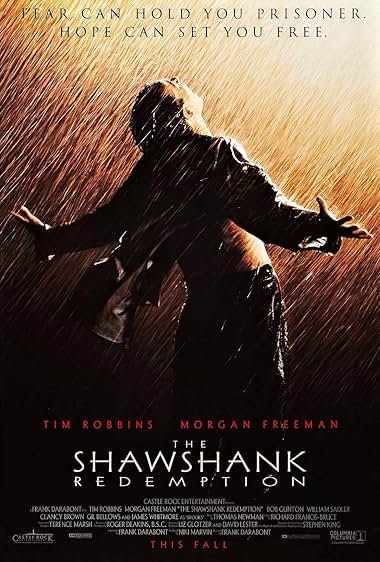
The Shawshank Redemption
"Fear can hold you prisoner. Hope can set you free."
Consistently voted by film lovers worldwide as the greatest movie ever made on the IMDb Top 250, Frank Darabont's The Shawshank Redemption is a transcendent, deeply inspiring dramatic tour de force adapted from Stephen King's beloved novella Rita Hayworth and Shawshank Redemption. The film follows Andy Dufresne (Tim Robbins), a quiet, cerebral New England banker who is wrongfully convicted of the brutal double murder of his adulterous wife and her lover in 1947 and sentenced to two consecutive life terms inside the grim, monolithic walls of Shawshank State Penitentiary in Maine. Over two decades of soul-crushing incarceration, Andy endures sadistic beatings from inmates and institutional cruelty from the hypocritical, bible-thumping Warden Samuel Norton and sadistic Captain Byron Hadley. Rather than surrendering to despair, Andy preserves his inner dignity, utilizing his sharp financial acumen to gain protection and orchestrating an underground library for his fellow prisoners. He forms an immortal, life-affirming bond of brotherhood with Ellis 'Red' Redding (Morgan Freeman in his definitive, soulful role as narrator and contraband procurer). A majestic meditation on resilience, redemption, patience, and the unquenchable power of the human spirit, the film's euphoric, rain-drenched climax remains cinema's ultimate symbol of freedom.

Scam 1992: The Harshad Mehta Story
Directed by National Award-winning filmmaker Hansal Mehta and adapted from journalists Debashis Basu and Sucheta Dalal's book The Scam, SonyLIV's biographical financial thriller Scam 1992: The Harshad Mehta Story achieved unanimous critical acclaim and unprecedented viewership, catapulting theater actor Pratik Gandhi to national stardom. Set against the chaotic, bullish Bombay Stock Exchange of the 1980s and early 1990s, the ten-episode series chronicles the meteoric rise and catastrophic downfall of stockbroker Harshad Shantilal Mehta. From his humble beginnings living in a tiny one-room chawl in Ghatkopar, Mehta's audacious ambition, infectious charm, and legendary motto 'Risk hai toh ishq hai' ('If there is risk, there is love') propel him to become the undisputed 'Big Bull' of Dalal Street, single-handedly manipulating market rallies using illegal fake bank receipts. However, when relentless financial journalist Sucheta Dalal (Shreya Dhanwanthary) breaks the story of a ₹5,000 crore banking fraud in The Times of India, Mehta's house of cards collapses under CBI raids and political abandonment. Featuring Achint Thakkar's viral electronic theme song and razor-sharp Gujarati-infused dialogue, Scam 1992 is an undisputed triumph.

The Wire
Created by former Baltimore Sun police reporter David Simon and former homicide detective Ed Burns, HBO's five-season drama The Wire is celebrated as a monumental, Dickensian sociological masterpiece on the slow collapse of the modern American city. Set across Baltimore, Maryland, the series eschews traditional cop-show melodrama to construct a meticulously researched, panoramic dissection of institutional failure. Season 1 investigates the high-rise drug trade of the Barksdale Organization, led by Avon Barksdale (Wood Harris) and his corporate-minded partner Stringer Bell (Idris Elba in his breakout role), pursued by rebellious detective Jimmy McNulty (Dominic West) through court-authorized wiretaps. Subsequent seasons expand the sociological lens to the dying working-class shipping ports (Season 2), corrupt city hall politics (Season 3), the decaying public school education system (Season 4), and print journalism ethics (Season 5). Featuring immortal characters like the whistling, shotgun-wielding stickup artist Omar Little (Michael K. Williams), The Wire is a profound, unforgettable treatise on human beings trapped inside broken systems. Praised by sociologists and television critics worldwide for its journalistic authenticity, David Simon's masterpiece transformed television into an urgent literary document that deconstructed institutional decay across twenty-first-century urban America with heartbreaking clarity.
The Shawshank Redemption
Consistently voted by film lovers worldwide as the greatest movie ever made on the IMDb Top 250, Frank Darabont's The Shawshank Redemption is a transcendent, deeply inspiring dramatic tour de force adapted from Stephen King's beloved novella Rita Hayworth and Shawshank Redemption. The film follows Andy Dufresne (Tim Robbins), a quiet, cerebral New England banker who is wrongfully convicted of the brutal double murder of his adulterous wife and her lover in 1947 and sentenced to two consecutive life terms inside the grim, monolithic walls of Shawshank State Penitentiary in Maine. Over two decades of soul-crushing incarceration, Andy endures sadistic beatings from inmates and institutional cruelty from the hypocritical, bible-thumping Warden Samuel Norton and sadistic Captain Byron Hadley. Rather than surrendering to despair, Andy preserves his inner dignity, utilizing his sharp financial acumen to gain protection and orchestrating an underground library for his fellow prisoners. He forms an immortal, life-affirming bond of brotherhood with Ellis 'Red' Redding (Morgan Freeman in his definitive, soulful role as narrator and contraband procurer). A majestic meditation on resilience, redemption, patience, and the unquenchable power of the human spirit, the film's euphoric, rain-drenched climax remains cinema's ultimate symbol of freedom.
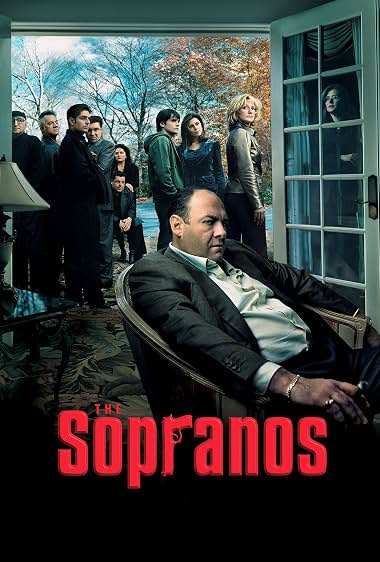
The Sopranos
Created by David Chase, HBO's 1999 drama series The Sopranos is widely credited by television historians as the singular work that launched the Golden Age of Television, transforming the medium into high art and winning 21 Primetime Emmy Awards. James Gandolfini delivers what is universally regarded as the greatest, most layered performance in television history as Tony Soprano, a ruthless, panic-attack-ridden New Jersey mob boss who secretly begins visiting psychiatrist Dr. Jennifer Melfi (Lorraine Bracco). Juggling the existential stresses of leading the DiMeo crime family against federal wiretaps and treacherous capos with the suburban tribulations of his marriage to Carmela (Edie Falco in an Emmy-winning powerhouse performance) and his rebellious children, Tony is haunted by a toxic, murderous relationship with his manipulative mother Livia (Nancy Marchand). Blending visceral mob violence, Freudian psychoanalysis, dark comedy, dream sequences, and existential angst, The Sopranos redefined the antihero archetype. Culminating in its historic, controversial smash-to-black cut to Journey's 'Don't Stop Believin'' in Holsten's diner, the series remains an unassailable masterpiece. With David Chase's fearless narrative innovations, the drama permanently eliminated the divide between television and prestige cinema, establishing modern serialization tropes and cementing Tony Soprano as television's ultimate anti-hero.
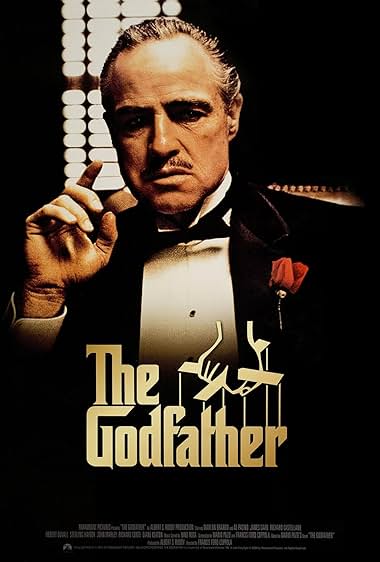
The Godfather
Francis Ford Coppola's 1972 cinematic masterpiece, The Godfather, stands universally acclaimed as one of the greatest, most influential achievements in the history of world cinema. Adapted from Mario Puzo's best-selling novel, the monumental crime epic chronicles the powerful Italian-American Corleone crime family under the patriarchal reign of Don Vito Corleone (Marlon Brando in an indelible, Oscar-winning performance). When Vito survives a brutal assassination attempt orchestrated by rival New York mafia syndicates during the burgeoning post-war narcotics trade, his reluctant, war-hero youngest son Michael Corleone (Al Pacino) is inexorably drawn into the dark vortex of violent family obligation. Michael's chilling moral decay and calculated descent from an idealistic outsider to a ruthless, cold-blooded mafia don serves as the tragic emotional backbone of the narrative. Featuring legendary supporting turns from James Caan, Robert Duvall, John Cazale, and Diane Keaton, Gordon Willis's brooding, shadow-drenched chiaroscuro cinematography, and Nino Rota's haunting, melancholic score, the film transcends the conventional gangster genre to become a searing, multifaceted critique of American capitalism, patriarchal dynasty, power, and betrayal. Winner of three Academy Awards including Best Picture, Best Actor, and Best Adapted Screenplay, The Godfather revolutionized American filmmaking.

Better Call Saul
Created by Vince Gilligan and Peter Gould as a prequel to their seminal series Breaking Bad, AMC's Better Call Saul accomplished the near-impossible: matching and, in the eyes of many critics, surpassing the dramatic depth and moral complexity of its predecessor across six peerless seasons. Bob Odenkirk delivers an immortal, heartbreaking performance as Jimmy McGill, an earnest, scrappy ex-con artist trying desperately to walk the straight and narrow as an elder law attorney while seeking the elusive approval of his brilliant, condescending older brother Chuck McGill (Michael McKean). Beside him is Kim Wexler (Rhea Seehorn in one of television history's greatest performances), a formidable lawyer whose profound love for Jimmy gradually draws her into his addictive, morally hazardous cons. Parallel to Jimmy's gradual descent into the flamboyant, soulless cartel lawyer Saul Goodman, Mike Ehrmantraut (Jonathan Banks) and Gus Fring (Giancarlo Esposito) wage a cold, lethal war against the psychotic Lalo Salamanca (Tony Dalton). Driven by breathtaking cinematography, patient character-first storytelling, and an exquisite black-and-white post-Breaking Bad finale, Better Call Saul stands as a triumph of American television drama.
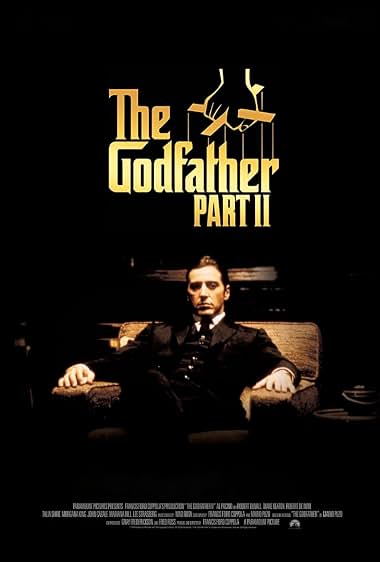
The Godfather Part II
Francis Ford Coppola's monumental 1974 cinematic triumph, The Godfather Part II, achieved what film scholars and critics had long considered impossible: crafting a sequel that not only equals its legendary predecessor but elevates the tragic American crime saga into high Shakespearean grandeur. Operating on an ambitious, parallel dual narrative structure, the film contrasts the moral disintegration of Michael Corleone (Al Pacino in a chilling, quiet tour de force) in the late 1950s with the humble, determined rise of his father, Vito Corleone (Robert De Niro in an Oscar-winning, Italian-speaking performance of magnetic gravitas), in early 1900s Little Italy, New York. As Michael navigates treacherous assassination attempts at his Lake Tahoe estate, hostile Senate racketeering hearings, and imperialist business investments in pre-revolutionary Havana alongside Jewish mob financier Hyman Roth (Lee Strasberg), his obsessive quest for absolute security metastasizes into monstrous paranoia. He systematically destroys his family bonds, exiling his wife Kay (Diane Keaton) after an abortion and ultimately ordering the execution of his own gentle older brother Fredo (John Cazale). Winner of six Academy Awards, including Best Picture, Best Director, and Nino Rota and Carmine Coppola's haunting score, The Godfather Part II is an unyielding, melancholic masterpiece on the devastating spiritual cost of absolute power. Its profound exploration of generational trauma, immigrant struggle, and capitalist betrayal continues to be revered globally as the pinnacle of American screenwriting and dramatic directing.

12 Angry Men
Directed with claustrophobic, masterclass precision by Sidney Lumet in his astonishing feature film debut and written by Reginald Rose from his 1954 teleplay, 12 Angry Men (1957) is universally revered by film scholars, legal academics, and cinephiles as the undisputed pinnacle of courtroom drama in motion picture history, holding an immortal 9.0 rating on IMDb. Set almost entirely within the stifling, sweltering confines of a New York City jury deliberation room on the hottest day of the year, twelve disparate men are charged with deciding the fate of an impoverished eighteen-year-old youth accused of stabbing his abusive father to death. With a mandatory death penalty awaiting a guilty verdict, an initial straw poll reveals that eleven jurors are convinced of the boy's guilt, eager to deliver a swift conviction and return home. Only Juror 8 (Henry Fonda in an immortal, quietly heroic performance of moral courage and civic integrity), an architect, votes 'not guilty'—not because he is convinced of the boy's innocence, but because he believes a human life deserves serious deliberation before being condemned. Through meticulous cross-examination of eyewitness testimonies, ballistics demonstration of a switchblade knife, and psychological deconstruction, Juror 8 systematically exposes the personal prejudices, class bigotry, and indifference clouding his peers' judgment. As tensions boil, Juror 8 clashes fiercely with the bitter, vindictive Juror 3 (Lee J. Cobb in an explosive performance of repressed paternal anguish) and bigoted Juror 10 (Ed Begley). Boris Kaufman's innovative cinematography—gradually switching to longer focal length lenses to physically compress the walls around the men—cements 12 Angry Men as a timeless, monumental masterpiece on reasonable doubt, institutional justice, and the supreme fragility of human empathy.

True Detective
Conceived and written by Nic Pizzolatto and directed entirely by Cary Joji Fukunaga, the inaugural 2014 season of HBO's anthology series True Detective stands as one of the greatest single seasons of television drama ever produced. Set against the desolate, sun-bleached swamps and decaying petrochemical refineries of coastal Louisiana, the narrative alternates across three timelines (1995, 2002, and 2012) as two former Louisiana State Police homicide investigators are interrogated about the unsolved ritualistic murder of prostitute Dora Lange. Matthew McConaughey delivers an electrifying, career-best performance as Rustin 'Rust' Cohle, an aloof, philosophically pessimistic detective steeped in cosmic nihilism, partnered with Woody Harrelson's Martin 'Marty' Hart, an ostensibly normal family man struggling with hypocritical morality and explosive temper. As their 17-year pursuit of the shadowy 'Yellow King' and the sinister Tuttle family unspools, their fractured partnership is pushed to existential madness. Featuring an immortal, six-minute uninterrupted tracking shot through a violent housing project and profound meditations on human consciousness, True Detective redefined television auteurism.
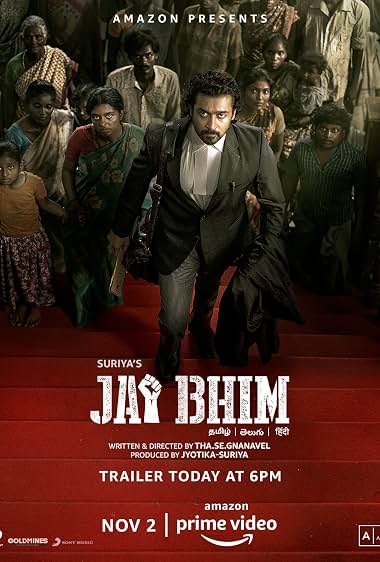
Jai Bhim
Written and directed by journalist-turned-filmmaker T.J. Gnanavel and produced by 2D Entertainment, the 2021 legal courtroom drama Jai Bhim became an international cinematic phenomenon, temporarily claiming the number-one rating on IMDb's top-rated movies of all time and earning universal global acclaim for its uncompromising, searing confrontation of institutional caste discrimination, police brutality, and human rights. Based on a harrowing real-life legal case fought in 1993 by former Madras High Court judge Justice K. Chandru, the narrative begins in a marginalized rural hamlet where Rajakannu (Manikandan) and his pregnant wife Sengeni (Lijomol Jose in a devastating, raw, and transformative performance of indomitable courage), members of the oppressed Irular indigenous tribal community, eke out a subsistence livelihood catching venomous snakes and rats. When a theft occurs at the local village president's mansion, the corrupt local police unlawfully detain, frame, and subject Rajakannu and his relatives to horrific custodial torture in an effort to extract a false confession. After Rajakannu mysteriously vanishes from custody, the police falsely claim he escaped. Sengeni seeks out advocate K. Chandru (superstar Suriya in a dignified, fiery, and fiercely committed performance), an idealistic human rights lawyer who takes on cases of the oppressed without charging a single rupee. Filing an unprecedented Habeas Corpus writ petition before the High Court, Chandru relentlessly dismantles a web of systemic state perjury and cover-ups. Jai Bhim is a monumentally courageous, emotionally gut-wrenching masterpiece on social justice and constitutional equality.
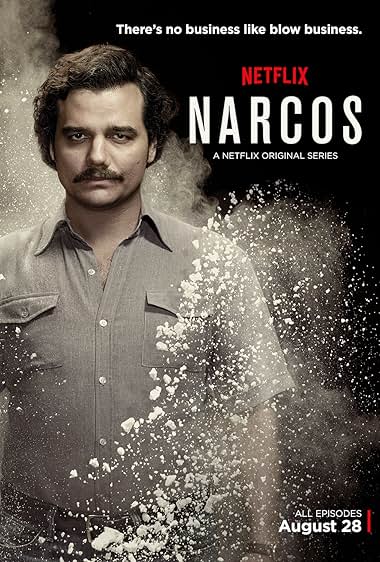
Narcos
Created by Chris Brancato, Carlo Bernard, and Doug Miro and executive produced by José Padilha, Netflix's gripping international crime drama series Narcos revolutionized global multilingual streaming television, earning critical acclaim and a massive worldwide following. Chronicling the explosive rise and violent fall of the Medellín Drug Cartel and its ruthless kingpin Pablo Escobar (Wagner Moura in a monumental, Golden Globe-nominated performance of menacing charisma and terrifying volatility), the series explores how a modest contraband smuggler in Colombia built an unprecedented multi-billion-dollar global cocaine empire through bloodshed, political terrorism, and robin-hood populist manipulation ('Plata o Plomo'—silver or lead). Countering Escobar's reign of terror are American DEA agents Steve Murphy (Boyd Holbrook, who also narrates with gritty documentary-style realism) and Javier Peña (Pedro Pascal in a magnetic, star-making breakthrough), alongside dedicated Colombian police commander Horacio Carrillo and the Search Bloc tactical unit. Seamlessly weaving authentic archival documentary footage, high-octane guerrilla warfare, and intricate geopolitical corruption, Narcos is a breathless, sweeping historical saga that captures the tragic human and political cost of the international war on drugs with unrelenting authenticity, brilliant pacing, and unforgettable performances.

Goodfellas
Martin Scorsese's 1990 tour de force Goodfellas is widely hailed as the definitive modern mob chronicle and a pinnacle of dynamic, kinetic American film grammar. Adapted from Nicholas Pileggi's non-fiction bestseller Wiseguy, the electrifying crime saga traces three decades in the exhilarating and degenerate life of Henry Hill (Ray Liotta in his crowning dramatic performance). Beginning with the famous opening line, 'As far back as I can remember, I always wanted to be a gangster,' the film immerses viewers into the opulent, seductive, and hyper-violent underworld of the Lucchese crime family in Brooklyn. Alongside his calculating mentor Jimmy 'The Gent' Conway (Robert De Niro) and the unhinged, psychopathic firebrand Tommy DeVito (Joe Pesci, who won the Academy Award for Best Supporting Actor for his explosive performance), Henry orchestrates lavish heists, including the historic Lufthansa robbery at JFK airport. However, as the 1970s slide into cocaine paranoia, betrayal, and federal crackdowns, Henry's glamorous empire spirals into a terrifying fight for survival. Featuring Michael Ballhaus's iconic, fluid Steadicam long-takes—including the legendary Copacabana tracking shot—Thelma Schoonmaker's razor-sharp rhythmic editing, and an exhilarating rock-and-roll soundtrack, Goodfellas redefined the mob genre forever.