
 TonightOnScreen Catalog
Explore Entertainment • Sci-Fi
Search our curated catalog of cinema releases, binge-worthy series, and where to stream them.
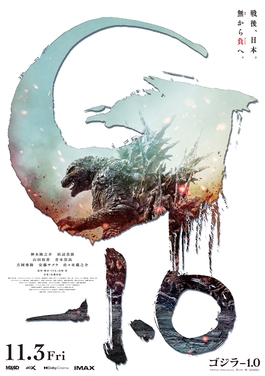
Godzilla Minus Zero
<p><strong>Godzilla Minus Zero</strong> (ゴジラ マイナス ゼロ) is the monumental direct sequel to the Academy Award-winning international phenomenon <a href="/title/godzilla-minus-one-2023">Godzilla Minus One</a>, written, directed, and visual effects-supervised by acclaimed visionary <a href="/person/takashi-yamazaki">Takashi Yamazaki</a>.</p><p>Set in 1954 as Japan strives to rebuild its war-torn infrastructure and enter the modern industrial era, the peace achieved by former kamikaze pilot Koichi Shikishima (<a href="/person/ryunosuke-kamiki">Ryunosuke Kamiki</a>) and his family is shattered. A mysterious biological sample retrieved from the depths of Tokyo Bay displays rapid, uncontrollable regenerative cell multiplication. At the same time, Noriko Oishi (<a href="/person/minami-hamabe">Minami Hamabe</a>) begins experiencing strange physical symptoms connected to the black cellular mark on her neck. When deep ocean seismic sensors detect an immense thermal surge moving toward the Japanese archipelago, a larger, more terrifying atomic titan emerges from the icy abyss, forcing ordinary citizens and veteran engineers to unite once more in a desperate battle for survival.</p>
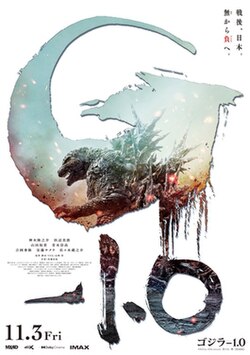
Godzilla Minus One
Godzilla Minus One is an emotionally devastating, visually extraordinary, and historically resonant monster blockbuster written, directed, and with visual effects by Takashi Yamazaki, becoming the first film in the seventy-year history of the Godzilla franchise to win an Academy Award. Set in the immediate aftermath of World War II, the storyline focuses on Koichi Shikishima, a guilt-ridden Imperial Japanese Navy kamikaze pilot who faked mechanical plane failure on Odo Island in the final days of the war to avoid a suicidal death. On the island, he freezes in terror during a nocturnal rampage by a juvenile, prehistoric dinosaur-like creature, resulting in the horrific massacre of the island's aircraft mechanics. Returning to a completely devastated, firebombed Tokyo, Koichi is consumed by survivor's guilt and shame, finding tenuous solace by sheltering Noriko Oishi, a courageous homeless woman, and an orphaned baby girl named Akiko. However, as postwar Japan struggles to rebuild from zero, American nuclear testing at Bikini Atoll severely mutates and irradiates the beast into Godzilla, a colossal, near-indestructible leviathan armed with a devastating blue atomic thermal breath. When Godzilla decimates the Ginza district of Tokyo, Koichi joins an elite, clandestine civilian armada of demobilized naval veterans led by an inventive former weapons engineer. Devising an audacious plan to sink and rapidly decompress Godzilla using deep-sea freon gas canisters in Sagami Bay, Koichi risks everything in an experimental fighter plane to reclaim his life and protect his newfound family. A profound human drama of trauma, redemption, and collective resilience, Minus One is an undisputed modern classic.
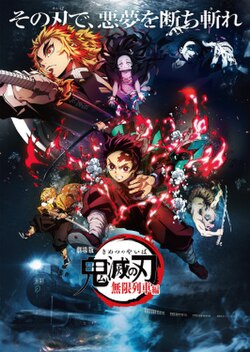
Demon Slayer: Kimetsu no Yaiba – The Movie: Mugen Train
Demon Slayer: Kimetsu no Yaiba – The Movie: Mugen Train is a record-shattering, emotionally electrifying, and visually spectacular supernatural action anime blockbuster directed by Haruo Sotozaki and produced by Ufotable, becoming the highest-grossing Japanese movie of all time worldwide. Continuing directly from the first season of the acclaimed anime phenomenon, the story follows young Demon Slayer Tanjiro Kamado, his demon sister Nezuko, and his spirited companions Zenitsu Agatsuma and Inosuke Hashibira, who board the colossal Mugen locomotive. The train has become a site of mysterious disappearances, with over forty passengers and several high-ranking demon slayers vanishing without a trace. Aboard the speeding iron train, the young swordsmen join forces with Kyojuro Rengoku, the towering, charismatic, and unyieldingly valiant Flame Hashira, whose blazing blade and indomitable warrior spirit inspire everyone around him. Soon, the demon slayers fall into deep, enchanted slumbers orchestrated by Enmu, the sinister Lower Rank One demon, who has biologically fused his physical anatomy into the locomotive itself, manipulating passengers' deepest dreams and tormenting Tanjiro with idyllic visions of his murdered family. Waking through agonizing self-sacrifice, Tanjiro and Inosuke battle along the carriage rooftops to sever Enmu's spinal connection and save the two hundred passengers. However, their triumph is abruptly shattered by the unexpected arrival of Akaza, the terrifyingly powerful Upper Rank Three demon, forcing Rengoku into a ferocious, mortal duel of wills and ideals that demands supreme sacrifice. Featuring revolutionary kinetic sword-fighting animations and unforgettable emotional pathos, Mugen Train is a modern blockbuster legend.
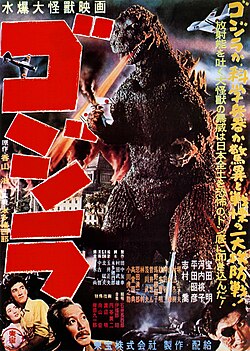
Godzilla
Godzilla (1954) is the seminal, historically monumental, and emotionally devastating original Japanese kaiju masterpiece directed by Ishirō Honda, which not only launched the world's longest-running film franchise but stands as a profound, heartbreaking allegory for Japan's nuclear trauma, the destruction of Hiroshima and Nagasaki, and the terrifying psychological aftermath of the atomic age. When Japanese fishing vessels near Odo Island are suddenly incinerated and capsized by a mysterious, catastrophic force accompanied by massive flooding, investigators discover that the destruction matches no known natural phenomenon. A prehistoric, radioactively awakened leviathan — Godzilla — emerges from the depths of Tokyo Bay, making its first landfall in Tokyo during a harrowing nighttime rampage of incomprehensible scale, obliterating the city's infrastructure with atomic breath and thundering footsteps as civilians are incinerated in their tens of thousands. The narrative centers on Dr. Kyohei Yamane, a paleontologist who believes Godzilla must be studied rather than destroyed as a living relic of prehistory; his daughter Emiko; her fiancé, the disillusioned biologist Dr. Serizawa who has developed a terrifying and morally catastrophic secret weapon called the Oxygen Destroyer; and Naval officer Hideto Ogata, who loves Emiko. As Tokyo burns and the Japanese government debates military versus scientific response, the moral weight of deploying Serizawa's annihilation weapon — a device so powerful it could end all ocean life — forms the film's devastating ethical core. Honda's somber masterpiece gave voice to an entire generation's collective nuclear horror, creating cinema's most iconic monster as a metaphor for mankind's most dangerous invention.
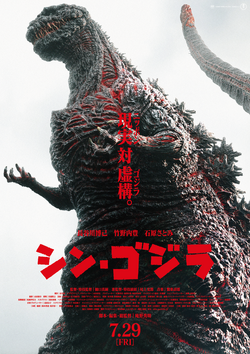
Shin Godzilla
Shin Godzilla is a darkly satirical, politically electrifying, and visually audacious kaiju reimagining co-directed by Hideaki Anno and Shinji Higuchi, winner of seven Japan Academy Film Awards including Best Picture and Best Director — marking the first Godzilla film to win Japan's most prestigious cinematic honors and the most critically acclaimed Japanese giant monster film since the 1954 original. Rather than focusing on military spectacle or human adventure, Anno's singular creative vision delivers a bracingly incisive dissection of Japanese government bureaucracy, institutional paralysis, and post-disaster crisis management that functions simultaneously as monster cinema and scathing political satire. When Tokyo Bay erupts in violent geothermal upheaval and a previously unknown, grotesquely mutating living organism begins crawling ashore through Kamakura, the Japanese government's multi-layered committee system collapses into paralytic jurisdictional disputes, procedural deadlock, and bureaucratic comedy as officials desperately attempt to determine which ministry has authority over an unprecedented biological kaiju. The creature — evolving through increasingly horrifying forms — rapidly mutates into Godzilla: a towering, asymmetrical, malformed, radiation-emitting behemoth covered in grotesque gill-like slashes, with a disturbingly humanoid face and the most visually unsettling design in franchise history. Godzilla's atomic breath sequence in Shinjuku — a silent, blinding column of white heat that obliterates skyscrapers in an instant before he goes dormant — is widely regarded as the most terrifying and artistically striking Godzilla moment in the entire franchise. The human story centers on Deputy Chief Cabinet Secretary Rando Yaguchi, who assembles an unconventional interdisciplinary task force to defeat Godzilla before American tactical nuclear strikes obliterate Tokyo.
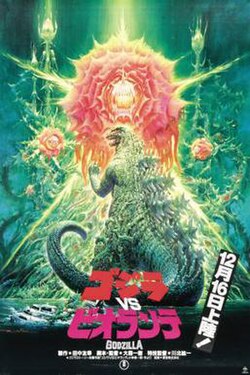
Godzilla vs. Biollante
Godzilla vs. Biollante is the most emotionally complex, scientifically ambitious, and hauntingly beautiful entry in the entire Heisei Godzilla series, directed by Kazuki Ōmori, weaving Cold War espionage thriller, ethical bioengineering debate, and tragic parental grief into a monster narrative of unprecedented psychological depth. Following the catastrophic 1984 Tokyo battle against Godzilla, the Japanese government's Godzilla Prediction Network extracts cellular G-Cells from the monster's cooling trail — cells of extraordinary genetic resilience with potential military and agricultural applications. The G-Cells become the target of an international bioengineering arms race between Japan's SSS9 anti-G biological warfare unit, the sinister Saradia Oil States Corporation, and the ruthless international espionage network. Brilliant biogeneticist Dr. Genshiro Shiragami, consumed by grief over his daughter Erika's death in a terrorist bombing, has been secretly fusing her cellular DNA with a rose — the flower she most loved — to preserve her spirit within the living plant. When the Saradia Organization threatens to steal his G-Cell research, Shiragami makes the agonizing decision to splice Erika's gene-fused rose cells with Godzilla's G-Cells, creating Biollante — a magnificent, nightmarish, and heartbreakingly beautiful hybrid creature that manifests first as a colossal luminous rose and later transforms into a devastating, tentacled, acid-spitting leviathan. As Godzilla is lured from volcanic imprisonment back to Japan, the moral weight of Biollante's existence — a grieving father's love twisted into a monster — gives the climactic battle a tragic, Frankenstein-esque dimension. A genuinely unique and intellectually resonant achievement in monster cinema.

King Kong vs. Godzilla
King Kong vs. Godzilla is the genre-defining, enormously entertaining, and historically monumental crossover spectacle directed by Ishirō Honda, uniting two of cinema's most towering and culturally iconic monster legends in the first — and for decades, only — meeting of the franchise titans, shattering Japanese box office records and becoming the most attended Godzilla film in Japanese history with over 11 million domestic tickets sold. The satirical narrative opens with the Pacific Pharmaceutical Company's ratings-hungry television executive Tako desperately seeking a sensational new entertainment property to revive flagging viewership. When rumors surface of a colossal ape-like creature worshipped as a god by the remote Faro Island inhabitants in the South Pacific, Tako dispatches a television crew to capture Kong for a global entertainment spectacle, inadvertently triggering a geopolitical monster collision of historic proportions. Meanwhile, the US Navy submarine Seahawk accidentally frees Godzilla from the Arctic glacier that imprisoned him in the last Showa film, and the resurrected leviathan immediately resumes his northward rampage across Japan. As Godzilla burns his way through Self-Defense Force positions and Kong — captured and sedated with Faro Island's addictive fermented berry juice — escapes his raft transport and battles Japanese military forces, the collision course between cinema's two supreme monsters becomes inevitable. The film's climactic Mt. Fuji showdown, featuring the memorable image of Kong grappling Godzilla in a lightning-fueled sumo wrestling match, is both absurd, exhilarating, and deeply satisfying — a joyful monster brawl that cemented the crossover formula still beloved today.