
 TonightOnScreen Catalog
Explore Entertainment • Sci-Fi
Search our curated catalog of cinema releases, binge-worthy series, and where to stream them.

The Avengers
The Avengers, written and directed by Joss Whedon, is the historic, genre-defining superhero crossover that revolutionized modern commercial filmmaking by proving that an interconnected, multi-franchise cinematic universe could achieve soaring artistic and commercial triumph. When Loki, the aggrieved and cunning Asgardian god of mischief, brokers an unholy alliance with the otherworldly Chitauri conqueror and seizes the Tesseract from a subterranean S.H.I.E.L.D. facility, global catastrophe becomes imminent. Confronted with a threat of cosmic proportions, S.H.I.E.L.D. Director Nick Fury reactivates the long-dormant 'Avengers Initiative', assembling a volatile pantheon of extraordinary, hyper-individualistic personalities: Tony Stark’s arrogant industrial genius, Steve Rogers’ stoic mid-century valor, Bruce Banner’s suppressed scientific terror, Thor’s godlike cosmic arrogance, and the lethal espionage prowess of Natasha Romanoff and Clint Barton. Initial encounters aboard the sky-bound S.H.I.E.L.D. Helicarrier deteriorate into explosive ideological friction, ego clashes, and violent physical confrontations, perfectly exploited by Loki to unleash the ferocious green rage of the Hulk and fracture the team from within. However, galvanized by the heartbreaking sacrifice of Agent Phil Coulson, the heroes find common purpose and assemble in the heart of Manhattan to defend Earth against an invading alien armada cascading through a cosmic wormhole above Stark Tower. Punctuated by the legendary 360-degree ensemble tracking shot, razor-sharp dialogue, and groundbreaking action set-pieces, The Avengers remains the definitive gold standard of comic-book adaptation.
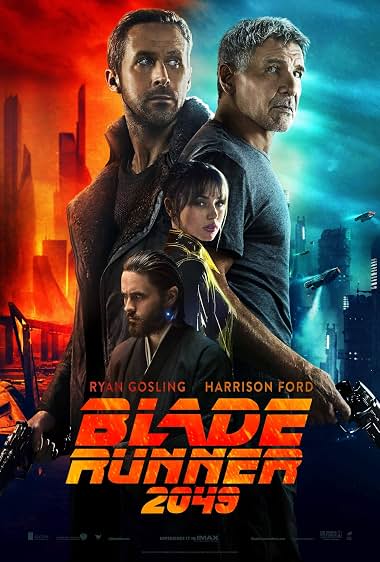
Blade Runner 2049
Directed by visionary auteur Denis Villeneuve, Blade Runner 2049 achieved the extraordinary feat of crafting a sequel to Ridley Scott's 1982 landmark that matches—and in many aspects surpasses—the atmospheric philosophical depth of the original. Set thirty years later in a freezing, neon-soaked Los Angeles choking in smog and climate collapse, Ryan Gosling stars as K, a Nexus-9 replicant working as an LAPD 'blade runner' who hunts down and 'retires' rogue older android models. During a routine assignment, K unearths a long-buried box containing the skeletal remains of a female replicant who miraculously died giving birth. Realizing that the revelation of replicant reproduction could shatter the fragile order between humans and synthetic slaves, LAPD Lieutenant Joshi (Robin Wright) orders K to destroy all evidence, while eccentric industrialist Niander Wallace (Jared Leto) hunts the child to build an interstellar workforce. Accompanied by his holographic AI companion Joi (Ana de Armas), K's existential quest leads him to former blade runner Rick Deckard (Harrison Ford), who has lived in hiding in irradiated Las Vegas. Winner of two Oscars including Roger Deakins's breathtaking cinematography, 2049 is a sci-fi masterpiece.

Ghost in the Shell
Ghost in the Shell is a seminal, philosophically profound, and visually dazzling cyberpunk neo-noir animated masterpiece directed by Mamoru Oshii, exploring the complex existential boundaries of humanity, consciousness, and technology in an interconnected future. Set in the sprawling, rain-soaked cybernetic metropolis of New Port City in 2029, advances in cybernetics allow humans to replace biological organs with synthetic cyberware and connect their biological minds directly to the global electronic data web. The narrative centers on Major Motoko Kusanagi, an elite cybernetic combat operative and field commander of Public Security Section 9, a specialized clandestine counter-cyberterrorist intelligence task force. Possessing a formidable, state-of-the-art synthetic cyborg body housing only a sliver of her original biological human brain—her unique 'ghost'—Major Kusanagi is plagued by profound existential doubts regarding the authenticity of her identity and free will. Section 9 is mobilized to hunt down the 'Puppet Master', an elusive, omnipotent cyber-hacker who infiltrates cyberbrains, altering victims' memories and manipulating foreign diplomats. However, as Kusanagi and her trusted tactical partner Batou pursue the digital entity, they discover that the Puppet Master is not a human hacker, but an autonomous, sentient artificial intelligence known as Project 2501, born organically from the sea of information. Seeking asylum and physical evolution, the entity desires to merge with Kusanagi's consciousness to transcend individual existence. Renowned for Kenji Kawai's haunting choral score and revolutionary cyber aesthetics that directly inspired The Matrix, Ghost in the Shell is a philosophical tour de force.
X-Men: Days of Future Past
X-Men: Days of Future Past, directed by Bryan Singer, is a monumental, ambitious science-fiction epic that seamlessly bridges two distinct generations of the cinematic X-Men franchise into a singular, high-stakes time-travel masterwork. Set in a dystopian, ash-strewn 2023, mutantkind and sympathetic humans are hunted to absolute extinction by the Sentinels—unstoppable, shape-shifting bio-mechanical hunter-killer robots engineered using the DNA of Mystique. In a desperate final stand inside a remote monastery in China, Professor Charles Xavier, Magneto, and the surviving mutants formulate a perilous plan: Kitty Pryde uses her phasing abilities to project Logan's consciousness back fifty years into his younger 1973 physical body to prevent Mystique from assassinating Sentinel inventor Bolivar Trask in Paris, the catalyst that triggered the robotic mass-production program. Awakening in the colorful, bell-bottom era of 1973, Logan must find and reconcile a young, disillusioned, and broken Charles Xavier—who has numbed his telepathic abilities with an experimental spine serum—and break the imprisoned Magneto out of a concrete cell beneath the Pentagon with the help of the supersonic speedster Quicksilver. Highlighting Quicksilver’s legendary, slow-motion kitchen breakout sequence and culminating in Magneto lifting RFK Stadium to barricade the White House, Days of Future Past is a thrilling, deeply poignant exploration of second chances and the power of hope.

Arrival
Directed with breathtaking philosophical depth by Denis Villeneuve and adapted by Eric Heisserer from Ted Chiang's Nebula Award-winning novella Story of Your Life, Arrival (2016) is widely recognized as one of the most profound, emotionally resonant, and intellectually thrilling science-fiction masterworks of the twenty-first century, earning eight Academy Award nominations including Best Picture and Best Director. When twelve colossal, monolithic extraterrestrial shell spacecraft hover silently over disparate locations across the globe, global civilization teeters on the brink of geopolitical panic and nuclear war. The U.S. military enlists elite linguistics professor Dr. Louise Banks (Amy Adams in an astounding, emotionally transcendent performance of quiet grace and heartbreak) alongside theoretical physicist Ian Donnelly (Jeremy Renner) and Colonel Weber (Forest Whitaker) to enter the Montana spacecraft and decipher the fundamental mystery: what is their purpose on Earth? Entering the gravity-defying chamber to communicate with two seven-limbed cephalopod alien beings dubbed 'heptapods' (Abbott and Costello), Louise discovers that their language is non-linear and visual, expressed through intricate, circular inky logograms that transcend human concepts of time. As Louise immerses herself in the alien syntax, the Sapir-Whorf hypothesis alters her cognitive brain chemistry, unlocking memories of a beloved daughter who died of a terminal illness—only to reveal an earth-shattering temporal truth about free will, destiny, and the bittersweet choices of human existence. Elevated by Bradford Young's painterly, mist-shrouded cinematography and Jóhann Jóhannsson's haunting score, Arrival is an unforgettable cinematic masterpiece on love, grief, and the unifying power of human empathy.
Captain America: The Winter Soldier
Captain America: The Winter Soldier, directed by Anthony and Joe Russo, is a masterclass in political espionage cinema and visceral action filmmaking, universally celebrated as one of the very finest achievements in the Marvel Cinematic Universe. Adapting to the modern world in Washington D.C., Steve Rogers serves as a covert operative for S.H.I.E.L.D., but grows deeply uneasy with Director Nick Fury’s preemptive surveillance agenda, Project Insight—a network of sub-orbital Helicarriers designed to eliminate potential domestic threats before they occur. The thriller detonates into high gear when Fury is ruthlessly ambushed in downtown D.C. by a shadowy, bionic-armed phantom assassin known as the Winter Soldier. Branded a fugitive traitor by senior S.H.I.E.L.D. official Alexander Pierce, Captain America goes on the run alongside Natasha Romanoff, unearthing a horrifying historical conspiracy: Hydra, the fascist organization Rogers defeated in World War II, was never extinguished; it secretly metastasized within S.H.I.E.L.D. for seven decades, manipulating global geopolitical conflicts to induce humanity to surrender their freedom for manufactured security. Steve's personal universe shatters completely when he discovers that the unstoppable, brainwashed assassin hunting him is none other than Bucky Barnes, his childhood best friend believed killed in 1945. Renowned for its breathtaking highway knife fight, intense elevator ambush, and hard-edged thematic integrity, The Winter Soldier transformed the MCU into a mature, sophisticated cinematic powerhouse.

Captain America: Civil War
Captain America: Civil War, masterfully helmed by Anthony and Joe Russo, is a gripping, emotionally fractured political-action thriller that shatters the foundational brotherhood of Earth's Mightiest Heroes. In the wake of catastrophic collateral damage across New York, Washington D.C., and Sokovia, world governments unite under United Nations auspices to ratify the Sokovia Accords—a sweeping legislative mandate establishing sovereign oversight over enhanced individuals. Haunted by the civilian deaths in Sokovia and his own culpability in creating Ultron, Tony Stark ardently champions government accountability. Conversely, Steve Rogers, scarred by the clandestine infiltration of S.H.I.E.L.D. by Hydra, stubbornly resists surrendering his autonomous conscience to bureaucratic committees. The philosophical chasm explodes into visceral personal warfare when a terrorist bombing at a Vienna diplomatic summit kills King T'Chaka of Wakanda, with Steve's brainwashed childhood friend Bucky Barnes—the Winter Soldier—implicated as the prime culprit. As Prince T'Challa dons the mantle of the Black Panther seeking blood retribution, Captain America goes rogue to protect Bucky, recruiting Hawkeye, Falcon, Ant-Man, and Scarlet Witch, while Iron Man mobilizes War Machine, Black Widow, Vision, and a prodigiously gifted high-schooler from Queens named Peter Parker. Culminating in the breathtaking, kinetic splash-page spectacle of the Leipzig/Halle airport battle and an agonizing, claustrophobic hand-to-hand brawl inside a frozen Siberian bunker, Civil War stands as an operatic masterclass in ideological complexity and tragic human conflict.

X-Men: First Class
X-Men: First Class, directed with sleek 1960s Cold War spy-thriller panache by Matthew Vaughn, revitalized the legendary mutant franchise by exploring the complex, tragic origin of the foundational friendship and philosophical rift between Charles Xavier and Erik Lehnsherr. The narrative traces the divergent journeys of two extraordinarily gifted young men: Charles, a wealthy, privileged Oxford telepath and geneticist living an idyllic academic existence in England, and Erik, a Holocaust survivor from Auschwitz who has spent his youth consumed by vengeful hatred, hunting Nazi scientists across the globe using his devastating power to manipulate magnetic fields. Their fates collide in 1962 during a CIA clandestine operation against Sebastian Shaw, a ruthless former Nazi scientist and energy-absorbing mutant who leads the Hellfire Club. Shaw schemes to provoke a thermonuclear World War III between the United States and the Soviet Union during the Cuban Missile Crisis to eradicate humanity and establish a mutant aristocracy. Recruited by the CIA, Charles and Erik scour America to recruit and train an elite, young squad of mutants—including Raven (Mystique), Hank McCoy (Beast), and Havok. However, while Charles advocates for peaceful human-mutant coexistence, Erik's trauma-hardened realism views human prejudice as an insurmountable barrier. Culminating in the breathtaking Cuban blockade showdown where Erik redirects hundreds of military missiles, First Class is an electrifying, stylish masterwork of ideology, tragedy, and brotherhood.

Deadpool & Wolverine
Directed by Shawn Levy, Marvel Studios' 2024 record-shattering R-rated superhero comedy Deadpool & Wolverine reunited Ryan Reynolds and Hugh Jackman in a glorious, multi-billion-dollar box office triumph that grossed over $1.337 billion worldwide. Six years after retiring his katanas, a depressed Wade Wilson (Ryan Reynolds) works as a used-car salesman until he is abducted by the Time Variance Authority (TVA) and informed by rogue bureaucrat Paradox (Matthew Macfadyen) that his timeline is dying following the death of its 'anchor being,' Wolverine. Desperate to save his found family, Deadpool travels the multiverse and recruits the 'worst Wolverine' (Hugh Jackman)—a broken, guilt-ridden variant who failed his world's X-Men. Cast into 'The Void'—a wasteland for forgotten timelines ruled by Professor Charles Xavier's twin sister Cassandra Nova (Emma Corrin)—the bickering duo engages in bloody, regenerative combat inside a Honda Odyssey, uniting with exiled legacy Marvel icons including Wesley Snipes as Blade, Jennifer Garner as Elektra, Channing Tatum as Gambit, and Chris Evans as Johnny Storm. Bursting with meta-fourth-wall-breaking satire, sensational needle drops, and deep affection for 20th Century Fox's superhero era, Deadpool & Wolverine is a riotous celebration of comic book cinema.
Godzilla
Godzilla (1954) is the seminal, historically monumental, and emotionally devastating original Japanese kaiju masterpiece directed by Ishirō Honda, which not only launched the world's longest-running film franchise but stands as a profound, heartbreaking allegory for Japan's nuclear trauma, the destruction of Hiroshima and Nagasaki, and the terrifying psychological aftermath of the atomic age. When Japanese fishing vessels near Odo Island are suddenly incinerated and capsized by a mysterious, catastrophic force accompanied by massive flooding, investigators discover that the destruction matches no known natural phenomenon. A prehistoric, radioactively awakened leviathan — Godzilla — emerges from the depths of Tokyo Bay, making its first landfall in Tokyo during a harrowing nighttime rampage of incomprehensible scale, obliterating the city's infrastructure with atomic breath and thundering footsteps as civilians are incinerated in their tens of thousands. The narrative centers on Dr. Kyohei Yamane, a paleontologist who believes Godzilla must be studied rather than destroyed as a living relic of prehistory; his daughter Emiko; her fiancé, the disillusioned biologist Dr. Serizawa who has developed a terrifying and morally catastrophic secret weapon called the Oxygen Destroyer; and Naval officer Hideto Ogata, who loves Emiko. As Tokyo burns and the Japanese government debates military versus scientific response, the moral weight of deploying Serizawa's annihilation weapon — a device so powerful it could end all ocean life — forms the film's devastating ethical core. Honda's somber masterpiece gave voice to an entire generation's collective nuclear horror, creating cinema's most iconic monster as a metaphor for mankind's most dangerous invention.

The Boy and the Heron
The Boy and the Heron is a mesmerizing, deeply personal, and psychologically surreal animated fantasy directed by Hayao Miyazaki, serving as an enigmatic, philosophical meditation on grief, artistic creation, and moral legacy that won the Academy Award for Best Animated Feature. Set in Japan during the Pacific War in 1943, the story follows twelve-year-old Mahito Maki, who is severely traumatized by the horrific hospital fire in Tokyo that claimed his beloved mother's life. Following the tragedy, Mahito's munitions-manufacturer father relocates their family to a quiet rural estate and marries his late wife's younger sister, Natsuko, leaving Mahito alienated, angry, and drowning in suppressed sorrow. While exploring the estate's sprawling grounds, Mahito is repeatedly taunted by an eccentric, talking Grey Heron who claims his mother is alive and lures him toward a crumbling, sealed stone tower constructed decades earlier by his mysterious granduncle. When a pregnant Natsuko wanders into the woods and disappears into the tower, Mahito enters the forbidden structure, descending through a mystical portal into a fantastical, subterranean netherworld where the living and the dead intersect. Accompanied by the abrasive Heron and a fearless sea-faring warrior woman named Kiriko, Mahito navigates treacherous oceans populated by unborn souls known as Warawara, carnivorous man-eating parakeets, and the powerful young fire-wielding maiden Himi. Confronting his granduncle, who offers Mahito control of the unstable stones that balance the universe, Mahito must choose between escaping into idealized creation or accepting the flawed reality of the living world. The film is a transcendent, poignant triumph.
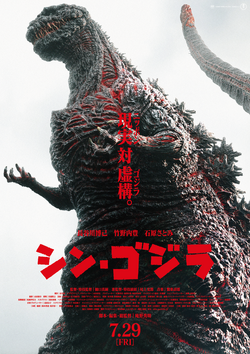
Shin Godzilla
Shin Godzilla is a darkly satirical, politically electrifying, and visually audacious kaiju reimagining co-directed by Hideaki Anno and Shinji Higuchi, winner of seven Japan Academy Film Awards including Best Picture and Best Director — marking the first Godzilla film to win Japan's most prestigious cinematic honors and the most critically acclaimed Japanese giant monster film since the 1954 original. Rather than focusing on military spectacle or human adventure, Anno's singular creative vision delivers a bracingly incisive dissection of Japanese government bureaucracy, institutional paralysis, and post-disaster crisis management that functions simultaneously as monster cinema and scathing political satire. When Tokyo Bay erupts in violent geothermal upheaval and a previously unknown, grotesquely mutating living organism begins crawling ashore through Kamakura, the Japanese government's multi-layered committee system collapses into paralytic jurisdictional disputes, procedural deadlock, and bureaucratic comedy as officials desperately attempt to determine which ministry has authority over an unprecedented biological kaiju. The creature — evolving through increasingly horrifying forms — rapidly mutates into Godzilla: a towering, asymmetrical, malformed, radiation-emitting behemoth covered in grotesque gill-like slashes, with a disturbingly humanoid face and the most visually unsettling design in franchise history. Godzilla's atomic breath sequence in Shinjuku — a silent, blinding column of white heat that obliterates skyscrapers in an instant before he goes dormant — is widely regarded as the most terrifying and artistically striking Godzilla moment in the entire franchise. The human story centers on Deputy Chief Cabinet Secretary Rando Yaguchi, who assembles an unconventional interdisciplinary task force to defeat Godzilla before American tactical nuclear strikes obliterate Tokyo.