
 TonightOnScreen Catalog
Explore Movies • Crime
Search our curated catalog of cinema releases, binge-worthy series, and where to stream them.

Memories of Murder
Directed by South Korean auteur Bong Joon-ho and co-written with Shim Sung-bo, Memories of Murder (Salinui chueok, 2003) is universally revered by critics and filmmakers as one of the finest, most atmospheric, and psychologically devastating crime procedurals in the history of world cinema, widely cited by David Fincher and Quentin Tarantino as an enduring benchmark for murder mysteries. Based on the real-life Hwaseong serial murders—Korea's first recorded serial killings between 1986 and 1991—the film is set in the rural province of Gyeonggi against the oppressive, rain-soaked backdrop of South Korea's decaying military dictatorship. The investigation is initially spearheaded by bungling, hot-tempered local detective Park Doo-man (superstar Song Kang-ho in a nuanced, layered masterclass blending buffoonery with growing existential dread), who relies on physical intuition, shamanistic superstitions, and violent custodial torture to force coerced confessions out of mentally disabled suspects. Desperate for professional help, the department brings in modern, analytical Seoul detective Seo Tae-yoon (Kim Sang-kyung), who meticulously pieces together empirical clues, discovering that the phantom killer only strikes on rainy nights, targeting women dressed in red while requesting a specific melancholic pop song on the radio. As the body count mounts and forensic evidence is repeatedly contaminated by incompetence and lack of modern DNA testing facilities, the detectives' rational facades disintegrate into madness and despair. Culminating in the unforgettable, haunting final freeze-frame where Song Kang-ho stares directly into the camera lens—staring directly into the eyes of the real killer who might be sitting in the theater—Memories of Murder is an unsparing, poetic tragedy on institutional failure, memory, and the banality of evil.

The Big Lebowski
Written, produced, and directed by the visionary filmmaking duo Joel and Ethan Coen, The Big Lebowski (1998) is universally celebrated as the undisputed pinnacle of American cult comedy, generating an enduring global subculture, annual festivals, and a recognized philosophical movement known as Dudeism. Set against the surreal, sprawling urban landscape of early 1990s Los Angeles during the Persian Gulf War, the story follows Jeffrey 'The Dude' Lebowski (Jeff Bridges in an immortal, culturally transcendent tour de force of relaxed slacker charisma), an unemployed, bathrobe-wearing, White Russian-sipping bachelor whose daily aspirations revolve entirely around bowling, joint-smoking, and listening to Creedence Clearwater Revival on cassette. The Dude's blissful zen equilibrium is violently shattered when two thuggish debt collectors mistake him for a wealthy Pasadena millionaire who shares the exact same name—'The Big' Jeffrey Lebowski—and urinate on his favorite living room rug that 'really tied the room together.' Seeking simple restitution for his ruined floor covering, The Dude visits the cantankerous, wheelchair-bound tycoon, only to be unwittingly recruited as a bagman to deliver a $1 million ransom for the millionaire's kidnapped trophy wife Bunny. Aided by his volatile, gun-toting Vietnam War veteran bowling partner Walter Sobchak (John Goodman in an explosive comedic masterclass) and timid friend Donny (Steve Buscemi), The Dude's errand descends into a labyrinth of German nihilists, avant-garde feminist painters (Julianne Moore as Maude Lebowski), pornographic kingpins (Ben Gazzara), a pedophilic bowling rival named Jesus Quintana (John Turturro), and hallucinatory Busby Berkeley-style bowling dream sequences. Shot with Roger Deakins's stylish cinematography and Carter Burwell's eclectic musical cues, The Big Lebowski remains an effortlessly brilliant, endlessly quotable masterpiece of modern cinematic absurdity: 'The Dude abides.'
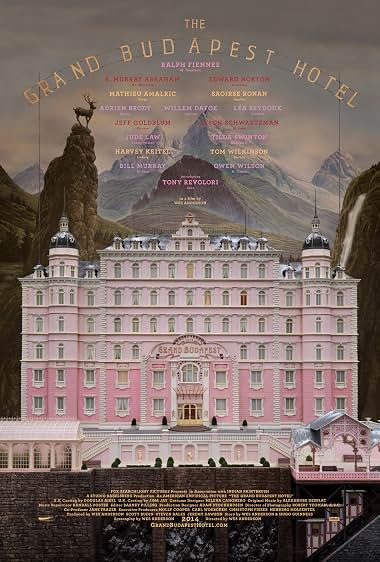
The Grand Budapest Hotel
Wes Anderson's visually dazzling, pastel-hued 2014 masterpiece The Grand Budapest Hotel stands as the auteur filmmaker's most commercially successful and critically revered achievement, grossing over $172 million globally and winning four Academy Awards. Set in the fictional, idyllic Central European alpine Republic of Zubrowka between the World Wars, the narrative unfolds through intricate nested flashback framing devices inspired by the literary works of Stefan Zweig. Ralph Fiennes delivers a career-defining comic and dramatic tour de force as Monsieur Gustave H., the fastidious, poetry-quoting, and impeccably perfumed legendary concierge of the opulent Grand Budapest Hotel, who maintains intimate romantic bonds with wealthy, elderly female clientele. When his octogenarian lover Madame D. (Tilda Swinton) dies under suspicious circumstances and bequeaths him an invaluable Renaissance painting entitled Boy with Apple, Gustave finds himself framed for murder by her ruthless fascist son Dmitri (Adrien Brody) and pursued by an unfeeling hitman (Willem Dafoe). Aided by his loyal young refugee lobby boy Zero Moustafa (Tony Revolori) and an apprentice baker with a Mexico-shaped birthmark named Agatha (Saoirse Ronan), Gustave orchestrates a daring prison break and cross-country train chase to prove his innocence. Featuring Alexandre Desplat's Oscar-winning folk balalaika score and Robert Yeoman's meticulously framed aspect ratio shifts, The Grand Budapest Hotel is a melancholic ode to a bygone era of elegance.

Omkara
Directed by Vishal Bhardwaj, the 2006 crime tragedy Omkara adapted Shakespeare's Othello into the rustic, gun-toting hinterlands of Western Uttar Pradesh with ferocious authenticity and literary brilliance, winning three National Film Awards. Ajay Devgn stars with smoldering intensity as Omkara 'Omi' Shukla, an outlaw gang leader and political enforcer for corrupt local politician Bhaisaab (Naseeruddin Shah). Omi elopes with the fair, innocent Dolly Mishra (Kareena Kapoor Khan in an acclaimed performance of Desdemona). When Omi promotes the educated, loyal Kesu Firangi (Vivek Oberoi as Cassio) over his faithful, limping lieutenant Ishwar 'Langda' Tyagi (Saif Ali Khan in a career-defining, historic performance of Iago), Langda's ego is mortally wounded. Langda plots a venomous psychological revenge, using an embroidered bridal waistband (kamarbandh) to convince the deeply insecure Omi that Dolly is having an illicit affair with Kesu. Driven to madness by the green-eyed monster of jealousy, Omi suffocates his beloved on their wedding bed before discovering the truth too late. Featuring Saif's unhinged genius and the iconic dance track 'Beedi Jalaile', Omkara is an undisputed classic.
Maqbool
Vishal Bhardwaj's 2003 crime masterpiece Maqbool kicked off his legendary Shakespearean trilogy by brilliantly adapting Macbeth into the ruthless, superstitious Mumbai underworld. Irrfan Khan delivers a career-defining, tour de force performance as Miyan Maqbool, the loyal, right-hand enforcer of aging underworld don Jahangir Khan, known respectfully as 'Abbaji' (Pankaj Kapur in a National Film Award-winning masterclass in understated power and casual menace). Maqbool is secretly in love with Nimmi (Tabu in an unforgettable, seductive turn as Lady Macbeth), Abbaji's young mistress. Nimmi insidiously fuels Maqbool's ambition, urging him to murder Abbaji in his bed and seize the syndicate. Two corrupt, astrology-obsessed police inspectors, Pandit and Purohit (Om Puri and Naseeruddin Shah playing the legendary Three Witches), predict that Maqbool will indeed take over the empire, but his reign will end in blood. When Maqbool executes the assassination, he is consumed by guilt, visual hallucinations, and the mutiny of loyal gang members. Maqbool established Vishal Bhardwaj and Irrfan Khan as titans of realistic Indian cinema. With unforgettable turns by Pankaj Kapur as the ruthless underworld don Jahangir Khan (Abbaji) and Tabu as the seductive Nimmi, Maqbool proved that classical literary tragedy could seamlessly illuminate the gritty realities of Mumbai's underworld, becoming a timeless classic of contemporary world cinema.
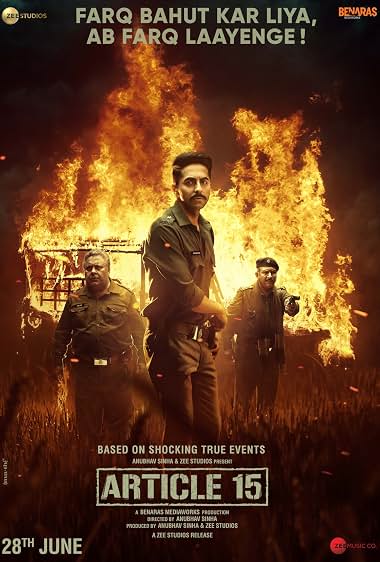
Article 15
Anubhav Sinha's hard-hitting 2019 crime procedural drama Article 15 stands as one of the most courageous, socially provocative, and critically lauded films in modern Hindi cinema, winning three Filmfare Awards. Inspired by true events, the film stars Ayushmann Khurrana as Ayan Ranjan, a privileged, foreign-educated IPS officer who receives his first posting in the rural hinterlands of Lalgaon, Uttar Pradesh. When two teenage Dalit girls are found gang-raped and hanged from a banyan tree, local subordinate officers—led by the deeply corrupt, casteist Circle Officer Brahmadutt Singh (Manoj Pahwa) and Jatav officer Nishad (Zeeshan Ayyub)—attempt to cover up the crime as an honor killing to protect high-caste landlords. Horrified by the entrenched, dehumanizing caste hierarchy that dictates who can touch whom or draw water from which well, Ayan invokes Article 15 of the Indian Constitution, which prohibits discrimination on grounds of religion, race, caste, sex, or place of birth. Navigating swampy fields, political threats, and departmental apathy, Ayan leads a tireless manhunt for a missing third victim, delivering an unsparing, searing indictment of institutional caste prejudice. Anubhav Sinha's uncompromising directorial vision, Ewan Mulligan's gritty cinematography, and Ayushmann Khurrana's measured intensity make Article 15 a watershed moment in socially conscious Indian cinema that confronts prejudice with unflinching honesty.

Fargo
Joel and Ethan Coen's 1996 neo-noir black comedy crime masterpiece Fargo stands as a pitch-perfect synthesis of regional Midwestern eccentricity, tragic greed, and shocking violence, winning two Academy Awards for Best Actress and Best Original Screenplay. Set across the blinding, frozen, snow-swept tundra of Minnesota and North Dakota, the narrative begins when pathetic, debt-ridden Minneapolis car salesman Jerry Lundegaard (William H. Macy in a sweat-drenched, iconic turn) concocts a desperate, half-baked scheme: hiring two sleazy petty criminals, Carl Showalter (Steve Buscemi) and the mute psychopath Gaear Grimsrud (Peter Stormare), to kidnap his own wealthy wife to extort a $1 million ransom from his disdainful father-in-law. When the botched abduction results in three senseless roadside murders, cheerful, seven-months-pregnant Brainerd police chief Marge Gunderson (Frances McDormand in an Oscar-winning, immortal performance of warmth and moral clarity) takes charge of the investigation. Featuring Carter Burwell's majestic Scandinavian-inspired score and Roger Deakins's vast whiteout cinematography—culminating in the infamous woodchipper sequence—Fargo is cinematic genius. Roger Deakins's stark, snow-drenched cinematography combined with Carter Burwell's haunting orchestral score cements Fargo as an enduring dark comedy milestone celebrated for its eccentric regional dialogue and eccentric moral worldview.

Company
Directed by Ram Gopal Varma, the 2002 neo-noir gangster thriller Company is widely hailed as the second installment in Varma's acclaimed Gangster Trilogy, winning seven Filmfare Awards and screening at the Austin Film Festival. Inspired by the real-life split between Dawood Ibrahim and Chhota Rajan in the D-Company syndicate, the film stars Ajay Devgn in an iconic, smoldering performance as Malik, a quiet, ruthless, and calculating underworld kingpin who runs organized crime like a sleek transnational corporation. Malik recruits Chandu (Vivek Oberoi in a sensational, multi-award-winning debut), an ambitious, fearless young slum enforcer. Together, they eliminate rival gang leaders and move their operations overseas to Hong Kong and Kenya to evade Mumbai Joint Commissioner of Police Veerappalli (Malayalam superstar Mohanlal in an extraordinary, naturalistic performance). However, misunderstandings engineered by corrupt politicians and malicious henchmen cause a fatal rift between Malik and Chandu, triggering a vicious international war of assassinations. Featuring Sandeep Chowta's atmospheric electronic score and Hemant Chaturvedi's cold cinematography, Company is a genre-defining triumph.

Pushpa 2: The Rule
Sukumar's record-setting 2024 pan-Indian action epic Pushpa 2: The Rule continues the seismic saga of Pushpa Raj (Allu Arjun) as he transitions from a rogue smuggler into the supreme, unassailable kingpin of the multi-billion-dollar international red sandalwood syndicate. Building upon the explosive ending of The Rise, Pushpa's bitter, humiliating rivalry with the sadistic, vengeful police officer Bhanwar Singh Shekhawat (Fahadh Faasil) erupts into all-out psychological and physical warfare. When Pushpa mysteriously vanishes from a high-security hospital, violent riots erupt across Andhra Pradesh as rural masses hail him as a folk hero, while intelligence agencies launch a massive manhunt. Featuring Allu Arjun's breathtaking, critically lauded 'Gangamma Jathara' traditional sari fight sequence, high-octane international smuggling networks spanning Japan and China, and emotional depth explored alongside Srivalli (Rashmika Mandanna), Pushpa 2 set unprecedented pre-release and opening day box office records across India. With Devi Sri Prasad's thunderous compositions and Mirosław Brożek's sweeping cinematography, The Rule elevated Indian mass cinema to staggering international heights.
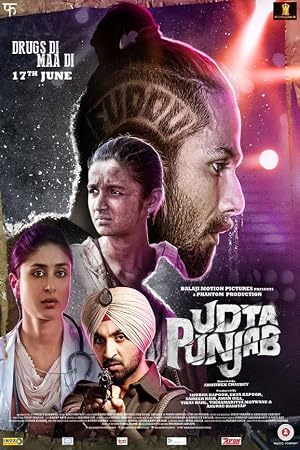
Udta Punjab
Directed by Abhishek Chaubey and co-written by Sudip Sharma, 2016's black comedy crime drama Udta Punjab shook Indian cinema and survived historic censorship battles to become one of the most politically urgent, uncompromising, and critically acclaimed films of the decade, winning four Filmfare Awards. Tackling the crippling socio-economic epidemic of substance abuse in northern India, the narrative interweaves four disparate lives across rural Punjab. Shahid Kapoor stars in a manic, physically uninhibited turn as Tommy Singh, a hedonistic, cocaine-addicted Punjabi rockstar whose glamorous musical persona fueling drug culture collides with jail and self-reckoning. Alia Bhatt delivers a devastating, raw, and transformative performance as 'Bauria', an unnamed migrant farm laborer from Bihar who stumbles upon a discarded parcel of heroin and is brutally enslaved by local narcotics peddlers. Meanwhile, righteous police inspector Sartaj Singh (Diljit Dosanjh in his sensational Hindi cinema debut) teams up with dedicated activist doctor Preet Sahni (Kareena Kapoor Khan) to expose high-level political and pharmaceutical collusion feeding narcotics to Punjab's youth. Featuring Amit Trivedi's raw, electrifying Punjabi score, Udta Punjab is a gritty, courageous, and emotionally shattering indictment of systemic addiction and human resilience.

Master
Directed by Lokesh Kanagaraj, the 2021 multi-starrer action blockbuster Master served as the savior of Indian cinema exhibition following pandemic lockdowns, grossing over ₹300 crore worldwide and uniting two of Tamil cinema's biggest superstars: Thalapathy Vijay and Vijay Sethupathi. Vijay stars as John Durairaj ('JD'), an alcoholic, beloved college professor and student union dean whose nonchalant charm and addiction mask deep psychological burnout. When campus election violence lands him in administrative trouble, JD accepts a three-month teaching assignment at a juvenile correctional facility in Nagercoil. There, he discovers the horrifying reality: ruthless gangster Bhavani (Vijay Sethupathi in a delightfully wicked, scene-stealing performance) uses juvenile inmates as scapegoats to take the fall for his illicit trucking, extortion, and slaughterhouse operations. When two innocent boys are murdered by Bhavani's henchmen for trying to contact him, JD quits alcohol, vows redemption, and wages an all-out war to emancipate the youth. Featuring Anirudh Ravichander's viral chartbusters (including 'Vaathi Coming') and an epic hand-to-hand climax, Master was a seismic box-office spectacle.
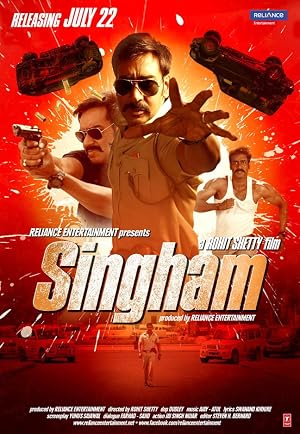
Singham
Rohit Shetty's 2011 adrenaline-fueled cop action blockbuster Singham inaugurated Bollywood's iconic Cop Universe, grossing over ₹140 crore and permanently etching the roaring lion roar and the catchphrase 'Aata Majhi Satakli!' into Indian popular culture. Ajay Devgn stars in one of his most celebrated, career-defining roles as Bajirao Singham, an honest, fearless police sub-inspector from the village of Shivgad on the Maharashtra-Goa border who commands the fierce loyalty of his community by resolving local disputes with wisdom and bone-breaking martial fury. Singham's life is upended when he confronts Jaikant Shikre (Prakash Raj in an unforgettable, comically villainous tour de force), a ruthless extortionist, corrupt politician, and kidnapping kingpin from Goa. Shikre uses his political clout to transfer Singham to his stronghold in Goa to humiliate and destroy him. Rather than breaking under torture and systemic police corruption, Singham unites the demoralized police force against Shikre, leading an army of khakis into a triumphant final confrontation. Featuring gravity-defying car flips and Ajay Devgn's unyielding intensity, Singham is a pure Bollywood classic. Bolstered by Ajay Devgn's iconic dialogue delivery, fiery action set pieces, and Ajay-Atul's thumping devotional background score, Singham redefined twenty-first-century Hindi action cinema and launched India's first shared mass-action cinematic universe.