
 TonightOnScreen Catalog
Explore Movies • Crime
Search our curated catalog of cinema releases, binge-worthy series, and where to stream them.
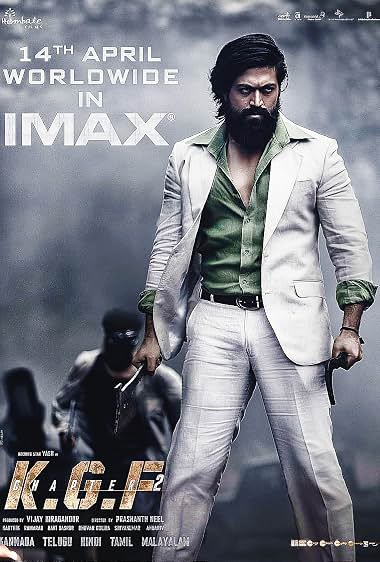
K.G.F: Chapter 2
Prashanth Neel's gargantuan 2022 magnum opus K.G.F: Chapter 2 obliterated Indian box office records, grossing over ₹1,250 crore ($150 million) worldwide to become the third highest-grossing Indian film of all time. Picking up immediately from the blood-soaked climax of Chapter 1, Rocky Bhai (Yash) reigns supreme as the undisputed overlord of the Kolar Gold Fields, transforming the slave encampment into a fortified, prosperous kingdom for the liberated miners while defying the entire global gold cartel. However, Rocky's reign is besieged by mortal peril on multiple fronts: Adheera (a menacing, Viking-inspired Sanjay Dutt), the brutal brother of KGF's founder who seeks to reclaim his birthright with an army of bloodthirsty zealots; Inayat Khalil, the formidable Dubai crime lord; and Ramika Sen (Raveena Tandon), the uncompromising, iron-willed Prime Minister of India who signs the order to destroy Rocky's criminal empire. Featuring Bhuvan Gowda's hyper-stylized monochrome cinematography, unrivaled mass elevation sequences, and Ravi Basrur's roaring symphonies, K.G.F: Chapter 2 concludes with a tragic, ocean-bound finale of epic operatic proportions. Beyond its earth-shattering domestic collections, K.G.F: Chapter 2 commanded unprecedented international theatrical runs across North America, the United Kingdom, the Gulf, and Southeast Asia. The film's thunderous dialogue delivery, stylized action choreography, and themes of undying maternal devotion cemented director Prashanth Neel and superstar Yash as the definitive architects of modern Indian elevation cinema.

Chithha
Directed by S.U. Arun Kumar and produced by Siddharth under Etaki Entertainment, 2023's Tamil drama thriller Chithha (Little Paternal Uncle) swept seven Filmfare Awards South, including Best Film – Tamil, Best Director, and Best Actor, celebrated by critics and human rights organizations as one of the most mature, sensitive, and emotionally devastating cinematic masterworks on child safety and restorative justice ever produced in India. Set in the quiet municipal town of Palani in Tamil Nadu, the story explores the deeply affectionate, pure bond between Eeswaran (superstar Siddharth in an astonishing, career-best performance of raw emotional vulnerability and helpless grief), a humble government office clerk, and his eight-year-old orphaned niece Sundari, whom he affectionately calls 'Settai'. Eeswaran has raised Sundari as his own child following his brother's untimely death, sharing everyday joys alongside his supportive romantic partner Shakthi (Nimisha Sajayan in a grounded, powerful performance). Their warm, idyllic world is shattered when a ruthless serial child abductor and predator begins operating in their district. When a colleague's daughter goes missing and is tragically found murdered, suspicion falls unjustly upon Eeswaran due to circumstantial town gossip. Shortly after clearing his name, tragedy strikes home when little Sundari is kidnapped from school. Eeswaran embarks on an agonizing, desperate quest to find his niece, confronting the unimaginable horror of predatory abuse. Refusing cheap sensationalism, Arun Kumar crafts a profoundly empathetic, heart-stopping narrative that focuses on healing, trauma-recovery, and unconditional paternal love. Featuring Dhibu Ninan Thomas's haunting score and Balaji Subramanyam's cinematography, Chithha is an unforgettable masterpiece of human compassion.
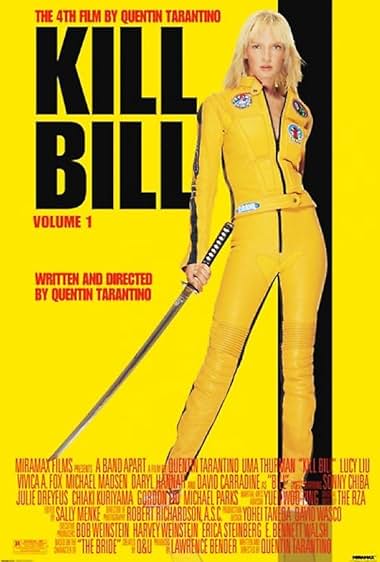
Kill Bill: Vol. 1
Written and directed with kinetic pop-culture virtuosity and blood-drenched martial arts reverence by Quentin Tarantino, Kill Bill: Vol. 1 (2003) is universally celebrated as one of the most stylish, iconic, and exhilarating revenge action epics in cinematic history, grossing over $180 million worldwide. Conceived as a passionate love letter to 1970s Shaw Brothers kung fu cinema, Japanese samurai chambara, spaghetti westerns, and anime, the narrative follows Beatrix Kiddo, universally known as 'The Bride' or 'Black Mamba' (Uma Thurman in a magnificent, physical, and emotionally fierce tour de force of martial arts mastery). A former elite assassin belonging to the deadly Deadly Viper Assassination Squad, The Bride is betrayed on her wedding rehearsal day in a rural El Paso chapel, where her treacherous mentor and former lover Bill (David Carradine) and her former squad colleagues slaughter her unborn child, fiancé, and guests, leaving her for dead with a bullet in her brain. Awakening from a four-year comatose slumber in a hospital, The Bride embarks on a relentless global crusade of vengeance, compiling a five-name hit list. Traveling to Okinawa to acquire a priceless, razor-sharp Hattori Hanzo katana forged by a legendary master swordsmith (Sonny Chiba), The Bride tracks her first target, Yakuza crime queen O-Ren Ishii (Lucy Liu), to the lavish House of Blue Leaves restaurant in Tokyo. There, she single-handedly decimates the Crazy 88 sword gang in a breathtaking, fountain-of-blood brawl and slashes through bodyguard Gogo Yubari, culminating in an ethereal, snowbound zen duel. Featuring an iconic yellow-and-black tracksuit tribute to Bruce Lee and Production I.G's violent anime sequence, Kill Bill: Vol. 1 is an undisputed action masterpiece.

Vikram Vedha
Written and directed by the husband-wife filmmaking duo Pushkar-Gayathri, 2017's Tamil neo-noir action thriller Vikram Vedha earned widespread critical acclaim and massive box office success, universally celebrated as one of the smartest and most gripping cat-and-mouse crime sagas in modern Indian cinema. Drawing brilliant inspiration from the ancient Indian mythological folktale of King Vikramaditya and the celestial vampire-demon Betaal, the narrative pits straight-laced, self-righteous encounter specialist cop Vikram (R. Madhavan in a steely, physically commanding performance) against Chennai's elusive, philosophical gangster kingpin Vedha (Vijay Sethupathi in a career-defining, charismatic tour de force). When Vedha voluntarily surrenders to police headquarters with disarming nonchalance, he challenges Vikram to listen to three allegorical parables from his criminal past before judging him. Each moral riddle shatters Vikram's rigid black-and-white perception of justice and morality, exposing deep-rooted police corruption, betrayal, and gray moral compromises within Vikram's own squad. Featuring Sam C.S.'s pulse-pounding, bass-heavy background score and P.S. Vinod's stylish lighting, Vikram Vedha is a flawlessly executed, intellectually stimulating crime classic that permanently elevated contemporary Indian genre filmmaking.
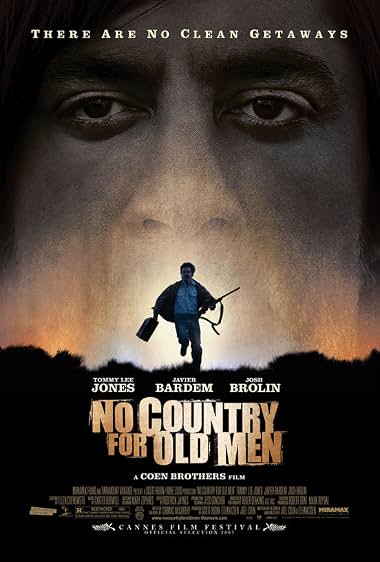
No Country for Old Men
Directed, written, and edited by Joel and Ethan Coen based on Cormac McCarthy's bleak 2005 novel, No Country for Old Men swept four Academy Awards including Best Picture, Best Director, and Best Adapted Screenplay, widely acknowledged as the greatest modern neo-Western crime thriller of the twenty-first century. Set against the desolate, sun-bleached scrubland of 1980 West Texas, the cataclysmic narrative is ignited when welder and Vietnam veteran Llewelyn Moss (Josh Brolin) stumbles upon the bloody aftermath of a desert drug shootout gone wrong, discovering a pickup truck loaded with heroin and a leather satchel containing $2.4 million in cash. Moss's fateful decision to abscond with the fortune unleashes Anton Chigurh (Javier Bardem in a chilling, Oscar-winning portrayal of psychotic sociopathy), an unstoppable hitman who executes victims with a captive bolt pistol, speaks in eerie philosophical paradoxes, and decides human lives on the flip of a coin. As Moss desperately evades Chigurh across dusty roadside motels, weary aging Sheriff Ed Tom Bell (Tommy Lee Jones) investigates the escalating carnage, lamenting his inability to comprehend or combat the senseless, remorseless wave of modern violent evil. Devoid of a traditional musical score and shot with stark, breathtaking precision by Roger Deakins, No Country for Old Men is an unyielding, haunting meditation on fate, mortality, and the terrifying randomness of human existence.

Taxi Driver
Martin Scorsese's 1976 psychological neo-noir masterpiece Taxi Driver, penned by Paul Schrader, captured the Palme d'Or at the Cannes Film Festival and earned four Academy Award nominations, establishing itself as the definitive, harrowing exploration of urban alienation, loneliness, and vigilante obsession in American cinema. Robert De Niro delivers one of the most electrifying and culturally transformative performances in screen history as Travis Bickle, an honorably discharged, insomniac Vietnam War veteran drifting through the gritty, neon-soaked decay of 1970s New York City as a nighttime yellow cab driver. Disgusted by the city's open prostitution, crime, and moral squalor—which he longs for 'a real rain' to wash away—Travis's profound social disconnection curdles into dangerous delusions of saviorhood. After a disastrous attempt to court a glamorous presidential campaign worker (Cybill Shepherd), Travis purchases black-market handguns, embarks on a fanatical physical regimen, and fixates on assassinating a politician before turning his violent impulses toward 'saving' Iris (Jodie Foster in a breakthrough, Oscar-nominated turn), an exploited 12-year-old runaway prostitute. Featuring Bernard Herrmann's sultry, ominous jazz score, Michael Chapman's atmospheric cinematography, and Bickle's iconic mirror improvisation—'You talkin' to me?'—Taxi Driver is an unsparing, profoundly influential psychological portrait of a ticking human time bomb that permanently revolutionized contemporary character studies.

Batman Begins
Christopher Nolan's 2005 triumph Batman Begins wiped away the stilted, campy excess of previous comic book adaptations, establishing a revolutionary, grounded hyper-realism that fundamentally reshaped modern superhero filmmaking. Christian Bale stars with fierce intensity as Bruce Wayne, a traumatized billionaire heir haunted by childhood guilt over the street murder of his parents in Gotham City. Wandering the globe to understand the criminal mind, Bruce is recruited in an Asian prison by the mysterious Henri Ducard (Liam Neeson) and trained in the brutal, ninja martial arts of the League of Shadows under Ra's al Ghul. Rejecting the League's genocidal plan to purge corrupt Gotham, Bruce returns home to weaponize fear against criminals. Aided by his loyal butler Alfred Pennyworth (Michael Caine), Wayne Enterprises tech innovator Lucius Fox (Morgan Freeman), and honest cop Jim Gordon (Gary Oldman), Bruce constructs his batsuit, tumbler batmobile, and symbolic vigilante persona. When corrupt psychiatrist Dr. Jonathan Crane / Scarecrow (Cillian Murphy) and the true Ra's al Ghul weaponize a hallucinogenic fear toxin to drive Gotham into insane civil war, Batman rises to save his city. Featuring Hans Zimmer and James Newton Howard's iconic score, Batman Begins stands as a monumental genesis of modern cinema.

Andhadhun
Sriram Raghavan's 2018 black comedy crime thriller Andhadhun is widely celebrated as one of the greatest, most ingeniously crafted screenplays in modern Indian cinema, winning three National Film Awards including Best Feature Film in Hindi and Best Actor for Ayushmann Khurrana. Khurrana stars as Akash, a talented Pune pianist who feigns complete blindness under the pretension that visual deprivation enhances his musical creativity. While performing at a private anniversary concert at the luxury apartment of washed-up 1970s Bollywood actor Pramod Sinha (Anil Dhawan), Akash inadvertently walks into a horrific crime scene: Pramod lies dead on the floor, murdered by his seductive younger wife Simi (Tabu in a delightfully wicked, career-best turn) and her corrupt police inspector lover Manohar (Manav Vij). Trapped in a terrifying dilemma, Akash must perform Beethoven on the piano while literally stepping over a corpse without revealing that he can see. As Simi discovers his secret, a chaotic spiral of poisonings, organ harvesting, and blind escapes ensues. Concluding with a legendary, endlessly debated open-ended final cane flick, Andhadhun grossed over ₹450 crore worldwide, becoming a massive blockbuster in India and China.

Drishyam 2
Directed by Abhishek Pathak, the 2022 suspense thriller Drishyam 2 revived the post-pandemic Bollywood box office with seismic power, grossing over ₹345 crore ($42 million) worldwide. Set seven years after the unsolved disappearance of Sameer Deshmukh, Vijay Salgaonkar (Ajay Devgn) has prospered, now owning a successful local movie theater and aspiring to produce his own feature film. However, his family remains deeply scarred by post-traumatic stress and continuous neighborhood gossip. The cold case erupts when a formidable new Inspector General, Tarun Ahlawat (Akshaye Khanna in a sharp, calculating turn), reopens the investigation alongside the vengeful former IG Meera Deshmukh (Tabu). Using modern forensic surveillance, bugging Vijay's home, and discovering an eyewitness who saw Vijay near the unfinished police station on the night of the crime, police exhume human skeletal remains from the police station floor. Just as all hope seems lost and handcuffs click around Vijay's wrists, Vijay unveils a breathtaking, multi-layered contingency plan conceived seven years in advance that stuns the court and police. A masterclass in narrative misdirection and screenwriting brilliance, Drishyam 2 was a massive critical and commercial triumph.
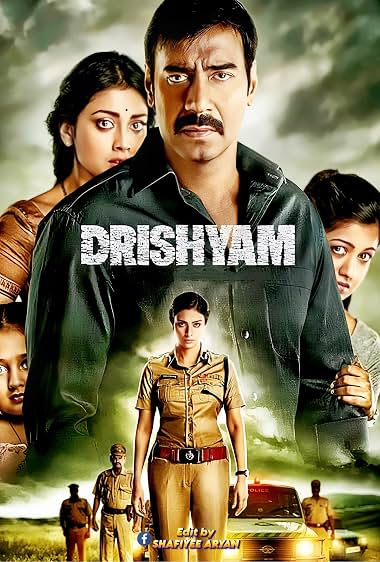
Drishyam
Directed by the late Nishikant Kamat, the 2015 Hindi suspense thriller Drishyam is celebrated as one of the sharpest, most gripping mystery masterclasses in Indian cinematic history. Adapted from Jeethu Joseph's legendary Malayalam original, the film stars Ajay Devgn as Vijay Salgaonkar, an uneducated, street-smart cable television operator and devoted family man living in a quiet Goan village. Vijay's peaceful life is shattered when an arrogant boy named Sameer—the only son of Goa's ruthless Inspector General of Police Meera Deshmukh (a formidable, steely Tabu)—blackmails Vijay's teenage daughter Anju with illicit camera footage. During a late-night confrontation, Sameer is accidentally killed by the family in self-defense. Drawing upon his encyclopedic knowledge of cinema thrillers, Vijay orchestrates an audacious, foolproof alibi around the dates of October 2nd and 3rd, conditioning his family to withstand brutal third-degree police interrogation while hiding the body under the very foundation of the police station itself. A riveting psychological chess match between a desperate father and an implacable mother, Drishyam achieved cult classic status and huge commercial success. Celebrated for its tight narrative pacing and peerless screenwriting, Drishyam became a widespread cultural reference point across India for police procedure and tactical alibis. Ajay Devgn's restrained, simmering performance and Tabu's ferocious maternal grief turned this psychological thriller into an enduring cult classic that continues to captivate mystery enthusiasts.
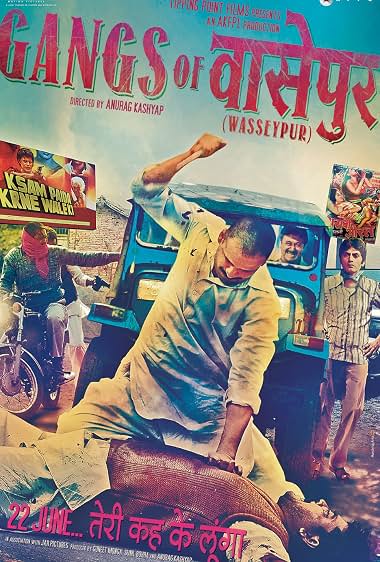
Gangs of Wasseypur
Screened in its full 321-minute glory at the 2012 Cannes Film Festival's Directors' Fortnight, Anurag Kashyap's two-part magnum opus Gangs of Wasseypur is widely heralded as the definitive Indian gangster epic and a monumental masterclass in visceral, gritty, realistic cinema. Spanning seven decades from the 1940s to the 2000s in the coal-mining town of Wasseypur in Dhanbad, Bihar (now Jharkhand), the sprawling saga chronicles a savage, multi-generational blood feud between the Qureshi clan and Shahid Khan's family. Manoj Bajpayee delivers a powerhouse, career-defining performance as Sardar Khan, a lustful, fearless mafia don determined to avenge his father's death by destroying ruthless coal baron and corrupt politician Ramadhir Singh (Tigmanshu Dhulia). When Sardar is gunned down in a petrol pump ambush, his soft-spoken, pot-smoking second son Faizal Khan (a breakout, star-making turn by Nawazuddin Siddiqui) transforms into a terrifying, cold-blooded king of violence. Boasting Sneha Khanwalkar's eclectic folk-rock soundtrack and dialogue that permanently embedded itself into Indian pop culture, Wasseypur redefined the grammar of modern Indian independent cinema. Universally celebrated by international film critics for its visceral realism and unflinching dark comedy, Gangs of Wasseypur remains a monumental cinematic textbook studied in film academies globally. Its brilliant ensemble cast, authentic dialect, and ruthless deconstruction of Indian political violence established Anurag Kashyap among the world's most daring independent auteurs.
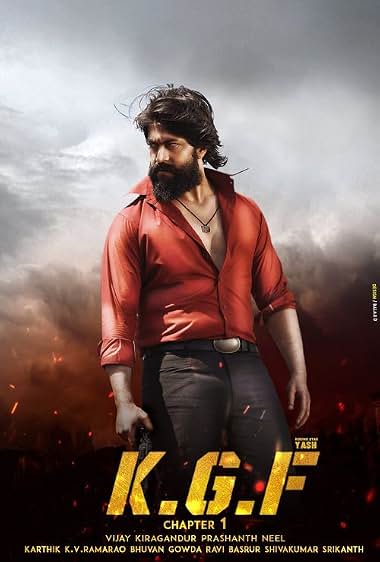
K.G.F: Chapter 1
Prashanth Neel's 2018 period action spectacle K.G.F: Chapter 1 catapulted Kannada cinema onto the global map, igniting an unprecedented pan-Indian cinematic revolution. Anchored by the electrifying screen presence and magnetic swagger of Yash as Raja Krishnappa Bairya (Rocky Bhai), the film begins with a solemn deathbed promise made to his impoverished mother: that he will not die poor, but live and die as the richest, most powerful man in the world. Rising through the brutal, blood-soaked streets of 1970s Bombay as a fearless underworld enforcer, Rocky accepts a high-stakes contract from rival gold mafia barons to assassinate Garuda, the sadistic, untouchable dictator ruling the clandestine slave colony of Kolar Gold Fields in Karnataka. Disguising himself as an enslaved laborer in KGF's hellish, dust-choked mines, Rocky witnesses the horrific atrocities inflicted on thousands of men, women, and children. Transforming from a mercenary into the saviour and hope of the oppressed, Rocky unleashes jaw-dropping mass elevation moments, razor-sharp non-linear editing, and Ravi Basrur's earth-shattering background score. Culminating in a historic, spine-chilling decapitation climax, K.G.F: Chapter 1 established Rocky Bhai as a permanent titan of Indian pop culture.