
 TonightOnScreen Catalog
Explore Movies • Crime
Search our curated catalog of cinema releases, binge-worthy series, and where to stream them.
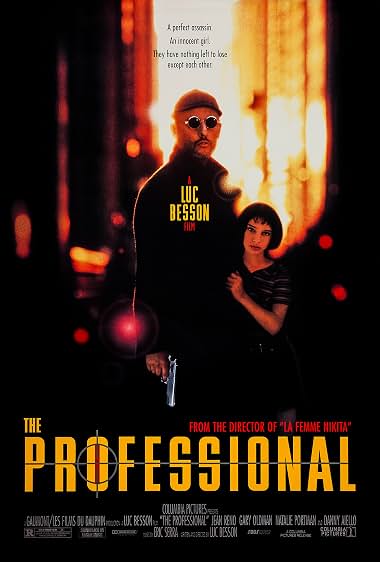
Léon: The Professional
Written and directed by visionary French filmmaker Luc Besson in his thrilling English-language debut, Léon: The Professional (1994) is an iconic, emotionally poignant, and stylistically electrifying neo-noir crime thriller that redefined international action cinema. Set in the gritty, atmospheric urban labyrinth of New York City's Little Italy, the narrative centers on Léon Montana (Jean Reno in an unforgettable, melancholic tour de force), an illiterate, solitary Italian hitman—or 'cleaner'—who lives a spartan, disciplined life drinking milk, caring tenderly for a potted aglaonema plant, and executing high-risk underworld contracts with silent, lethal precision for mob boss Tony (Danny Aiello). Léon's carefully isolated, monastic existence is permanently upended when the family of his neglected 12-year-old apartment neighbor, Mathilda Lando (Natalie Portman in an extraordinary, star-making cinematic debut of astounding maturity and emotional depth), is ruthlessly massacred in a corridor drug dispute by psychotic, Beethoven-worshiping, pill-popping DEA agent Norman Stansfield (Gary Oldman in one of the most explosive, terrifyingly charismatic villainous performances in screen history, roaring 'Bring me everyone... EVERYONE!'). Léon reluctantly opens his door to shelter the traumatized girl, leading to a tender, unorthodox surrogate bond where Mathilda teaches Léon to read and feel, while Léon trains her in the deadly mechanics of weaponry so she can avenge her murdered four-year-old brother. Featuring Thierry Arbogast's dynamic widescreen cinematography and Eric Serra's atmospheric score, Léon: The Professional culminates in an earth-shattering tactical siege that cements its status as a timeless action-drama classic celebrated for its heart and explosive thrills.

The Usual Suspects
Directed by Bryan Singer and brilliantly scripted by Christopher McQuarrie—who won the Academy Award for Best Original Screenplay—The Usual Suspects is universally celebrated as one of the finest, most intricately constructed neo-noir mystery crime thrillers of all time. The film opens in the smoldering, fiery wreckage of a cargo ship in the Port of Los Angeles, where 27 men have been massacred and $91 million in cocaine has mysteriously vanished. Customs agent Dave Kujan (Chazz Palminteri) interrogates one of only two survivors: Roger 'Verbal' Kint (Kevin Spacey in an Oscar-winning, career-defining performance), a meek, physically disabled small-time con artist with cerebral palsy. Through a series of mesmerizing, convoluted non-linear flashbacks, Verbal recounts how five disparate career criminals—Dean Keaton (Gabriel Byrne), McManus (Stephen Baldwin), Fenster (Benicio del Toro), Hockney (Kevin Pollak), and Verbal himself—were detained in a retaliatory New York police lineup and subsequently blackmailed into pulling off an impossible heist by Kobayashi, the inscrutable legal representative of Keyser Söze: a ruthless, ghost-like Turkish underworld kingpin whose very name strikes terror across global syndicates. Culminating in the single most legendary, breathtaking twist ending in cinematic history, The Usual Suspects is an undisputed storytelling masterclass in deception, memory, and suspense.
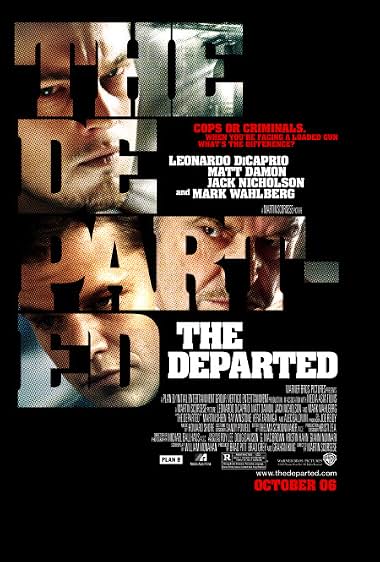
The Departed
Martin Scorsese's 2006 Boston crime masterpiece The Departed finally earned the legendary filmmaker his long-overdue Academy Award for Best Director, alongside Best Picture, Best Adapted Screenplay, and Best Editing. An electrifying American adaptation of the Hong Kong thriller Infernal Affairs, the film plays out a lethal cat-and-mouse game between two moles on opposing sides of the law in South Boston. Colin Sullivan (Matt Damon) is a polished, ambitious Massachusetts State Police detective secretly groomed from childhood as a mole for sadistic Irish-American mob kingpin Frank Costello (Jack Nicholson). Simultaneously, Billy Costigan (Leonardo DiCaprio in a career-defining, nerve-shredding performance) is an undercover state trooper recruited by Captain Queenan (Martin Sheen) and fiery Staff Sergeant Dignam (Mark Wahlberg in an Oscar-nominated turn) to infiltrate Costello's inner circle. As both the police force and the syndicate realize an enemy mole is in their ranks, Billy and Colin race feverishly to uncover each other's true identities, descending into a spiral of paranoia, bloodshed, and double-crosses. Driven by Thelma Schoonmaker's razor-fast editing and Howard Shore's Celtic guitar riffs, The Departed is an unyielding American thriller.

Thani Oruvan
Directed and written with electric intellectual tension by Mohan Raja and co-scripted with Subha, 2015's Tamil action thriller Thani Oruvan (The Solitary One) grossed over ₹105 crore, swept three Filmfare Awards South, and is universally celebrated as a game-changing watershed milestone that redefined modern Indian commercial thrillers, inspiring high-profile remakes across multiple Indian languages. Operating on the brilliant philosophical premise that a man's greatness and character are defined by the caliber of his enemy, the film follows Mithran IPS (Jayam Ravi in a career-defining, physically imposing, and intensely dedicated performance), an idealistic and disciplined young police officer undergoing training in Chennai. Mithran and his cadre of trusted police friends conduct clandestine nocturnal investigations into disparate urban crimes, realizing that street-level murders, narcotics smuggling, and corporate corruption are not random, but orchestrated by a single unseen mastermind puppeteering government policies. Mithran's target is revealed to be Dr. Siddharth Abhimanyu (Arvind Swamy in a legendary, career-rejuvenating tour de force of aristocratic sophistication, chilling intellect, and seductive evil), a celebrated scientist, Padma Shri nominee, and ruthless pharmaceutical tycoon who coldly manufactures medical crises, murders whistleblowers, and manipulates corrupt cabinet ministers to maximize corporate drug profits. When Siddharth discovers Mithran's secret investigation, he bugs Mithran's personal life, turning Mithran's romantic relationship with Mahima (Nayanthara) and his close friends into collateral damage. Culminating in an electrifying battle of wits, Hip-hop Tamizha's iconic pulsating electronic background score and Ramji's stylish cinematography elevate Thani Oruvan into an immortal, intellectually exhilarating crime thriller masterclass.

Vada Chennai
Directed by Vetrimaaran, the 2018 epic crime drama Vada Chennai (North Madras) is widely celebrated as one of the most intricately written, authentic, and culturally profound gangster epics in Indian cinema history, grossing over ₹75 crore and earning massive cult status. Spanning three decades from 1987 to the late 2000s in the working-class coastal neighborhood of North Chennai, the film stars Dhanush in a career-best, tour de force performance as Anbu, a skilled carrom player who aspires to become a national champion and stay away from street crime. However, Anbu is inexorably drawn into a complex web of gang warfare between rival underworld factions led by Guna (Samuthirakani) and Senthil (Kishore). The narrative unspools the legendary history of Rajan (Ameer in an iconic, magnetic turn), a righteous fisherman and community protector whose betrayal and murder ignited a thirty-year cycle of blood. When corporate real estate projects threaten to displace his slum community, Anbu embraces his destiny as their leader. Featuring Santhosh Narayanan's electrifying folk score, Vada Chennai is an undisputed cinematic milestone. Vetrimaaran's immersive world-building, sprawling multi-decade non-linear narrative, Santhosh Narayanan's atmospheric musical landscape, and an ensemble cast featuring Andrea Jeremiah and Samuthirakani establish Vada Chennai as an epic milestone in realistic Tamil crime cinema.

Kaithi
Directed by Lokesh Kanagaraj, the 2019 neo-noir action thriller Kaithi is the foundational cornerstone of the Lokesh Cinematic Universe (LCU), achieving massive critical acclaim and grossing over ₹105 crore without containing a single song, dance sequence, or romantic subplot. Set entirely over the course of one terrifying, rain-soaked night in Tiruchirappalli, the story begins when honest police inspector Bejoy (Narain) seizes 900 kilograms of raw cocaine belonging to dangerous drug lord Adaikalam. In retaliation, Adaikalam's gang drugs forty high-ranking police officers at an IG retirement party. With every ambulance disabled and officers dying, Bejoy's only hope is Dilli (Karthi in a career-defining, powerhouse performance)—a quiet, heavily built paroled prisoner who has just completed a ten-year prison sentence and is traveling to an orphanage to see his 10-year-old daughter Amudha for the first time in his life. Driving a giant lorry filled with unconscious cops across gang-infested highways, Dilli must overcome lethal blockades, leading to a legendary Gatling-gun siege at a police station. Packed with raw stunt choreography and Sam C.S.'s score, Kaithi is an action masterclass.

Joker
Todd Phillips' psychological character study Joker took the cinematic world by storm in 2019, winning the prestigious Golden Lion at the Venice International Film Festival and grossing over $1.074 billion to become the highest-grossing R-rated film of all time. Joaquin Phoenix delivers an astonishing, Oscar-winning transformative performance as Arthur Fleck, an impoverished, mentally fragile party clown living with his ailing mother Penny in the trash-strewn, strike-crippled streets of 1981 Gotham City. Afflicted with a neurological disorder that causes uncontrollable bursts of inappropriate laughter, Arthur is marginalized, beaten, and stripped of social services by an indifferent society. Drawing inspiration from Martin Scorsese's Taxi Driver and The King of Comedy, the film charts Arthur's chilling transformation as he guns down three abusive Wall Street businessmen on a subway, inadvertently igniting a populist anti-rich clown protest movement across Gotham. Arthur's descent into homicidal theatricality culminates in a live television confrontation with smug late-night talk show host Murray Franklin (Robert De Niro). Powered by Hildur Guðnadóttir's haunting cello score, Joker is a searing exploration of mental illness, systemic neglect, and societal collapse.

Super Deluxe
Directed, written, and produced by cult auteur Thiagarajan Kumararaja in collaboration with brilliant co-writers Mysskin, Nalan Kumarasamy, and Neelan K. Sekar, Super Deluxe (2019) is universally revered as one of the most audacious, visually idiosyncratic, and philosophically complex multi-narrative postmodern masterpieces ever produced in Indian cinema. Interweaving four seemingly disparate stories across Chennai over a single chaotic, fateful day, the narrative explores profound themes of morality, gender identity, institutional hypocrisy, religious dogma, and the cosmic insignificance of human suffering. In the first strand, unfaithful wife Vembu (Samantha Ruth Prabhu) and her guilt-ridden husband Mugil (Fahadh Faasil) must frantically dispose of the corpse of Vembu's former lover, who died suddenly of a heart attack during an illicit liaison, drawing the attention of a brutally corrupt, voyeuristic police inspector Berlin (Mysskin). In the second strand, transgender woman Shilpa (Vijay Sethupathi in a transcendent, National Film Award-winning performance of breathtaking grace, maternal love, and heartbreaking vulnerability) returns to her family to reunite with her joyful young son Rasukutty, only to be subjected to humiliating abuse by transphobic authorities. In the third strand, four horny schoolboys skip class to watch an adult film, only to experience psychological trauma when they discover the actress is one of the boy's own mother (Ramya Krishnan as Leela). In the fourth strand, a fanatical religious man (Aruldoss) experiences a crisis of faith after a miraculous event. Featuring Yuvan Shankar Raja's mesmerizing synth-infused musical landscape and P.S. Vinod and Nirav Shah's vibrant, neon-drenched cinematography, Super Deluxe is a dizzying, intellectually exhilarating cinematic triumph that redefines the boundaries of Indian storytelling.

Scarface
Directed with operatic flamboyance by Brian De Palma and scripted with ferocious vulgar poetry by Oliver Stone, Scarface (1983) stands as one of the most culturally seismic, quoted, and influential crime epics in motion picture history, permanently reshaping hip-hop culture, modern video games, and global pop mythology. A loose, modern reimagining of Howard Hawks's 1932 gangster classic, the narrative begins during the 1980 Mariel boatlift, as Tony Montana (Al Pacino in a volcanic, legendary performance of ferocious intensity and Cuban accent) arrives in Miami as an impoverished, politically rebellious refugee with nothing to lose. Refusing to scrub dishes or live in squalor, Tony's unbridled ambition, ruthless violence, and fearless audacity propel him through Miami's blood-soaked underworld following a harrowing chainsaw encounter in Little Havana. Overthrowing drug kingpin Frank Lopez (Robert Loggia), Tony seizes control of South Florida's cocaine empire, amassing mountains of illicit cash, a gaudy marble mansion, and Lopez's glamorous, cocaine-addicted trophy wife Elvira Hancock (Michelle Pfeiffer in a mesmerizing, icy breakout role). However, Tony's megalomania, unchecked cocaine addiction, and obsessive, incestuous protectiveness over his younger sister Gina (Mary Elizabeth Mastrantonio) lead to catastrophic paranoia, culminating in a doomed battle against Bolivian cartel kingpin Alejandro Sosa's mercenary hit squad. Armed with an M16 grenade launcher, shouting 'Say hello to my little friend!', Tony meets his apocalyptic end, cementing Giorgio Moroder's synth-wave score and Scarface as the definitive, tragic cautionary tale of the American Dream gone mad.
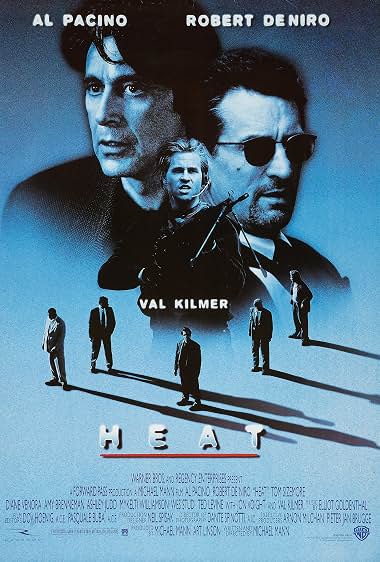
Heat
Written and directed by visionary filmmaker Michael Mann, Heat (1995) is widely revered by critics and filmmakers as the undisputed crown jewel of modern urban crime cinema and the ultimate heist epic. Marking the historic first on-screen pairing of cinema titans Al Pacino and Robert De Niro, the film is an operatic, multi-layered existential duel staged across the sleek, neon-drenched glass and concrete architecture of contemporary Los Angeles. De Niro portrays Neil McCauley, a cold, ascetic master thief who lives by a strict professional survival code: 'Don't let yourself get attached to anything you are not willing to walk out on in 30 seconds flat if you feel the heat around the corner.' Pacino plays Lieutenant Vincent Hanna, an obsessive, hyper-caffeinated LAPD robbery-homicide detective whose relentless pursuit of high-end predators has wrecked his third marriage. When McCauley's crew—including Val Kilmer and Tom Sizemore—pulls off a bloody armored car heist, Hanna locks onto their trail, sparking an intellectual and tactical chess match between two mirrored men who recognize each other as two sides of the same driven coin. Their legendary, understated conversation over coffee at Kate Mantilini diner remains one of the greatest dramatic scenes in Hollywood history. Culminating in a breathtaking, thunderous 10-minute daylight downtown bank shootout with authentic, non-foley live gunfire echoes and an atmospheric climax under the runway lights of LAX, Dante Spinotti's cinematography and Elliot Goldenthal's ambient score elevate Heat into an immortal American tragedy on obsession, discipline, and loneliness.

Satya
Ram Gopal Varma's 1998 underworld masterpiece Satya fundamentally destroyed the glamorous, melodramatic conventions of Bollywood cinema, pioneering the realistic, gritty 'Mumbai Noir' movement and winning six Filmfare Awards and a National Film Award. Co-written by Anurag Kashyap and Saurabh Shukla, the film follows Satya (J.D. Chakravarthy), an innocent, jobless immigrant from South India who arrives in Mumbai seeking honest work. Falsely implicated in a restaurant bar fight and brutalized in jail, Satya befriends the charismatic, uninhibited gangster Bhiku Mhatre (Manoj Bajpayee in an explosive, legendary performance that made him an overnight star). Released into Mhatre's underworld syndicate, Satya's sharp intellect and fearless efficiency quickly elevate him to the gang's mastermind strategist, waging war against rival boss Guru Narayan. Satya's burgeoning romance with his naive neighbor Vidya (Urmila Matondkar) represents his dream of redemption, but the arrival of ruthless Police Commissioner Amod Shukla (Paresh Rawal) triggers an unavoidable, blood-soaked tragedy. With Vishal Bhardwaj's visceral score ('Sapne Mein Milti Hai') and Gerard Hooper's handheld camera, Satya changed Indian cinema forever.

Vikram
Lokesh Kanagaraj's 2022 multi-starrer neo-noir action thriller Vikram stands as a monumental landmark in Tamil cinema, establishing the renowned Lokesh Cinematic Universe (LCU) and grossing over ₹430 crore worldwide. Anchored by the majestic return of universal star Kamal Haasan, the narrative begins with a masked squad executing high-ranking police officials and Karnan (Kamal Haasan), the supposedly alcoholic foster father of an honest narcotics officer. Black-ops commander Amar (Fahadh Faasil) is hired by the state police to conduct a covert investigation into the killings, peeling back Karnan's double life. Meanwhile, drug kingpin Sandhanam (a ferocious, cocaine-snorting Vijay Sethupathi) leads a brutal street gang hunting for two missing shipping containers filled with high-grade raw cocaine belonging to the mysterious syndicate head Rolex. When Karnan is revealed to be none other than Agent Vikram—the legendary former commander of the 1986 black-squad—he wages an all-out guerilla war to eliminate drug cartels and save his infant grandson. Concluding with a spine-tingling, internet-breaking five-minute cameo by Suriya as Rolex, Vikram delivered peerless cinematic adrenaline and critical acclaim.