
 TonightOnScreen Catalog
Explore Entertainment • Action
Search our curated catalog of cinema releases, binge-worthy series, and where to stream them.

Sholay
Sholay is an iconic cinematic work starring Amitabh Bachchan as Jai.
Pathaan
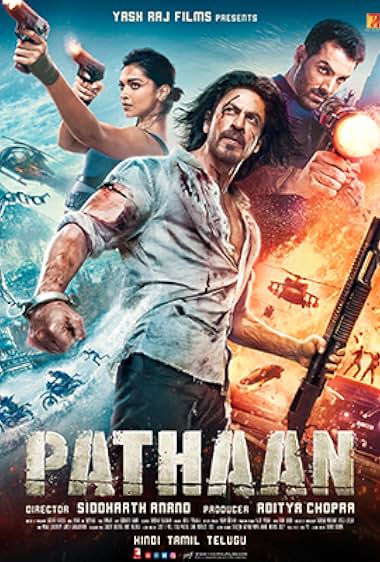
Pathaan is an iconic cinematic work starring Shah Rukh Khan as Pathaan.
Blade Runner
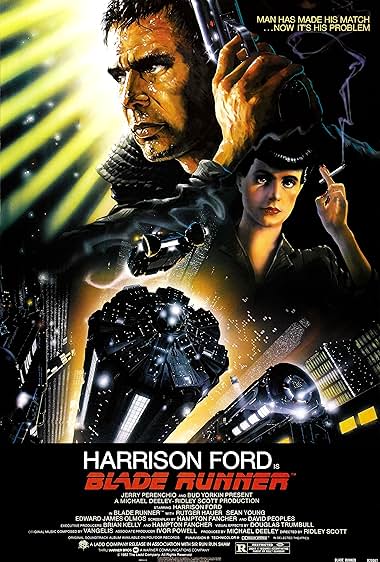
Directed by Ridley Scott and adapted from Philip K. Dick's seminal 1968 novel Do Androids Dream of Electric Sheep?, the original 1982 cyberpunk sci-fi noir masterpiece Blade Runner fundamentally revolutionized modern cinema's visual grammar, setting the definitive aesthetic blueprint for dystopian futurism, industrial neo-noir, and existential science fiction. Set in the perpetually rain-slicked, smog-choked, and neon-drenched vertical megalopolis of Los Angeles in November 2019, the narrative follows world-weary former police detective Rick Deckard (Harrison Ford in a moody, cynical, and emotionally complex performance). Deckard is forcibly pulled out of retirement as a specialized 'Blade Runner'—a government operative tasked with tracking down and 'retiring' four rogue Nexus-6 bioengineered humanoid replicants who have violently escaped an off-world slave colony to seek out their creator, Dr. Eldon Tyrell, in a desperate quest to extend their programmed four-year lifespans. As Deckard conducts psychological Voight-Kampff empathy tests and falls in love with Tyrell's experimental replicant assistant Rachael (Sean Young), the moral boundary between synthetic life and authentic humanity dissolves into ambiguity. Deckard's hunt leads to a harrowing nocturnal duel across the crumbling architecture of the Bradbury Building against replicant leader Roy Batty (Rutger Hauer in an unforgettable, poetic tour de force). Spared by Batty in his final moments, Deckard listens to the immortal 'Tears in rain' monologue: 'I've seen things you people wouldn't believe... All those moments will be lost in time, like tears in rain. Time to die.' Scored by Vangelis's iconic synthesizer soundscapes and framed by Jordan Cronenweth's chiaroscuro lighting, Blade Runner remains a peerless philosophical meditation on mortality, memory, and the human soul.

Karnan
Written and directed by visionary filmmaker Mari Selvaraj in his second directorial triumph and produced by Kalaipuli S. Thanu, 2021's Tamil action drama Karnan is widely celebrated as one of the most powerful, visually poetic, and politically urgent masterpieces in modern Indian cinema, loosely inspired by the real-life 1995 Kodiyankulam caste violence in rural southern Tamil Nadu. Set in the barren, sun-scorched landscape of Podiyankulam, an oppressed, marginalized Dalit village, the community is subjected to systemic indignity and economic strangulation by the refusal of authorities and adjacent dominant-caste villages to grant them a bus stop, forcing schoolgirls and laborers to endure daily harassment. The village finds its fiery, mythic savior in Karnan (superstar Dhanush in an astonishing, physically monumental performance of righteous fury, vulnerability, and heroic stature), a rebellious young youth waiting for military recruitment who refuses to bow his head to institutional humiliation. When a pregnant village girl collapses after a passing bus refuses to stop, Karnan and the village youth pelt the bus with stones, sparking a retaliatory crackdown orchestrated by ruthless, casteist district police officer Kannabiran (Natty Natraj in a chilling villainous turn). Karnan rises with ancestral sword in hand, aided by his loving elderly mentor Yaeman (veteran actor Lal in an unforgettable, emotionally grounding performance) and his beloved Draupadi (Rajisha Vijayan), transforming his people's defense into an epic stand for human dignity and constitutional rights. Packed with striking metaphorical folk allegories—a headless statue, a sacrificial horse, a tied-up donkey symbolizing oppression, and a child wearing the mask of Goddess Kattu Pechi—Santhosh Narayanan's soul-stirring folk soundtrack ('Kandaa Vara Sollunga') and Theni Eswar's cinematography make Karnan an immortal milestone.
Chak De! India
Directed by Shimit Amin, written by Jaideep Sahni, and produced by Yash Raj Films, Chak De! India (2007) is universally hailed as the greatest sports drama in the history of Indian cinema, winning the National Film Award for Best Popular Film Providing Wholesome Entertainment. Shah Rukh Khan delivers a stripped-down, career-best performance devoid of romantic tropes as Kabir Khan, a disgraced former captain of the Indian men's national field hockey team who was falsely accused of match-fixing against Pakistan in a World Cup final. Seven years later, carrying the agonizing weight of public condemnation and questioned patriotism, Kabir takes on the seemingly hopeless position of head coach for the neglected, underfunded Indian women's national field hockey team. Kabir inherits a divided squad of 16 young women from diverse linguistic, regional, and socioeconomic backgrounds across India, plagued by ethnic prejudice, petty rivalries, and low self-esteem. Through uncompromising physical discipline, tactical acumen, and his famous 'Sattar Minute' (Seventy Minutes) inspirational locker-room monologue, Kabir welds them into a cohesive, united national unit, guiding them to the World Cup in Melbourne, Australia to conquer world hockey giants. Celebrating female empowerment, secular unity, and national pride, Chak De! India remains an evergreen cultural phenomenon and timeless cinematic classic.

Mad Max: Fury Road
Directed, produced, and co-written by visionary Australian director George Miller, 2015's Mad Max: Fury Road redefined twenty-first-century kinetic action cinema, earning 10 Academy Award nominations and winning six Oscars for its astonishing physical stunt choreography, practical visual effects, and relentless pacing. In a post-apocalyptic desert wasteland where gasoline and water are precious, scarce commodities, tyrannical warlord Immortan Joe rules the Citadel through religious fanaticism and armed legions of suicidal War Boys. Max Rockatansky (Tom Hardy), a haunted wanderer seeking survival after the loss of his family, is captured and utilized as a universal 'blood bag' for ailing War Boy Nux (Nicholas Hoult). Fate intersects when Imperator Furiosa (Charlize Theron in a fierce, iconic performance of feminist defiance and indomitable courage) hijacks a heavily armored 18-wheel War Rig to rescue Immortan Joe's enslaved 'Five Wives' and lead them across the radioactive desert toward her mythical matriarchal homeland, the 'Green Place'. Forming an uneasy alliance of mutual survival, Max and Furiosa battle relentless waves of spiked demolition vehicles, flame-throwing guitarists, and rival warlords in a continuous, two-hour vehicular chase of operatic proportions. John Seale's vibrant orange-and-teal cinematography and Junkie XL's thunderous percussive score elevate Fury Road into an uncompromising, peerless action masterpiece that will be studied for generations.

Indian
Directed by S. Shankar, the 1996 vigilante action thriller Indian (Hindustani) made history as India's official submission for the Best Foreign Language Film at the 69th Academy Awards, winning three National Film Awards including Best Actor for Kamal Haasan. Haasan delivers an immortal, prosthetic-laden double performance as Senapathy, a 70-year-old former veteran of Subhas Chandra Bose's Indian National Army (INA), and his corrupt modern son Chandrabose. Living in Chennai, Senapathy is sickened by the systemic cancer of bribery and administrative corruption that poisons public healthcare, transport, and police services, leading to the tragic death of his daughter Kasturi. Utilizing the ancient, lethal martial art of Varma Kalai (pressure point strikes that paralyze or kill), Senapathy launches an unyielding vigilante crusade, assassinating corrupt municipal commissioners, doctors, and treasury clerks on live television. The moral tragedy peaks when Senapathy discovers his own son Chandrabose took bribes that resulted in a fatal school bus brake failure, forcing the father to hunt down his own child in the name of justice. With A. R. Rahman's legendary score, Indian remains a monumental masterpiece.

Omkara
Directed by Vishal Bhardwaj, the 2006 crime tragedy Omkara adapted Shakespeare's Othello into the rustic, gun-toting hinterlands of Western Uttar Pradesh with ferocious authenticity and literary brilliance, winning three National Film Awards. Ajay Devgn stars with smoldering intensity as Omkara 'Omi' Shukla, an outlaw gang leader and political enforcer for corrupt local politician Bhaisaab (Naseeruddin Shah). Omi elopes with the fair, innocent Dolly Mishra (Kareena Kapoor Khan in an acclaimed performance of Desdemona). When Omi promotes the educated, loyal Kesu Firangi (Vivek Oberoi as Cassio) over his faithful, limping lieutenant Ishwar 'Langda' Tyagi (Saif Ali Khan in a career-defining, historic performance of Iago), Langda's ego is mortally wounded. Langda plots a venomous psychological revenge, using an embroidered bridal waistband (kamarbandh) to convince the deeply insecure Omi that Dolly is having an illicit affair with Kesu. Driven to madness by the green-eyed monster of jealousy, Omi suffocates his beloved on their wedding bed before discovering the truth too late. Featuring Saif's unhinged genius and the iconic dance track 'Beedi Jalaile', Omkara is an undisputed classic.

Company
Directed by Ram Gopal Varma, the 2002 neo-noir gangster thriller Company is widely hailed as the second installment in Varma's acclaimed Gangster Trilogy, winning seven Filmfare Awards and screening at the Austin Film Festival. Inspired by the real-life split between Dawood Ibrahim and Chhota Rajan in the D-Company syndicate, the film stars Ajay Devgn in an iconic, smoldering performance as Malik, a quiet, ruthless, and calculating underworld kingpin who runs organized crime like a sleek transnational corporation. Malik recruits Chandu (Vivek Oberoi in a sensational, multi-award-winning debut), an ambitious, fearless young slum enforcer. Together, they eliminate rival gang leaders and move their operations overseas to Hong Kong and Kenya to evade Mumbai Joint Commissioner of Police Veerappalli (Malayalam superstar Mohanlal in an extraordinary, naturalistic performance). However, misunderstandings engineered by corrupt politicians and malicious henchmen cause a fatal rift between Malik and Chandu, triggering a vicious international war of assassinations. Featuring Sandeep Chowta's atmospheric electronic score and Hemant Chaturvedi's cold cinematography, Company is a genre-defining triumph.
Haider
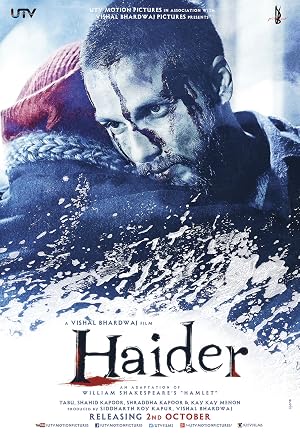
Directed by Vishal Bhardwaj and co-written with Kashmiri journalist Basharat Peer, Haider completed Bhardwaj's monumental Shakespearean tragedy trilogy (following Maqbool and Omkara), winning five National Film Awards and the People's Choice Award at the Rome Film Festival. Transposing Shakespeare's Hamlet to the snow-covered, conflict-torn Kashmir Valley in 1995, Shahid Kapoor delivers a career-defining, volcanic performance as Haider Meer, a student of poetry who returns to Srinagar to discover his doctor father has disappeared following an army raid, his ancestral home burned down, and his mother Ghazala (Tabu in an astonishing, incestuously charged performance of Queen Gertrude) living cheerfully with his devious politician uncle Khurram (Kay Kay Menon as Claudius). Driven to the brink of madness, Haider is approached by the enigmatic Roohdar (Irrfan Khan in an immortal cameo), who reveals that Khurram betrayed Haider's father to his death in an army interrogation camp. Featuring Shahid Kapoor's unhinged 'Chutzpah' town square monologue, Pankaj Kumar's pristine snow cinematography, and Vishal Bhardwaj's haunting Kashmiri folk compositions, Haider is a cinematic milestone. Vishal Bhardwaj's evocative musical compositions, Gulzar's poetic lyrics, and Pankaj Kumar's snowbound cinematography in Kashmir establish Haider as one of the most intellectually rigorous and emotionally devastating literary adaptations in world cinema.

Baahubali: The Beginning
S. S. Rajamouli's 2015 fantasy epic Baahubali: The Beginning is the watershed landmark that single-handedly conceived the modern 'Pan-Indian Film' industry. Set in the fictional, grand kingdom of Mahishmati, the film opens with Queen Mother Sivagami (Ramya Krishna) drowning in a river while holding an infant boy aloft above the raging waters. Raised by tribal villagers beneath towering waterfalls, the boy grows into the extraordinarily strong, adventurous Shivudu (Prabhas). Driven by curiosity and love for rebel warrior Avantika (Tamannaah Bhatia), Shivudu scales the colossal waterfalls and learns that his mother is Devansena (Anushka Shetty), held in chains for 25 years by the tyrannical Emperor Bhallaladeva (Rana Daggubati). Shivudu rescues Devasena and discovers his royal identity: he is Mahendra Baahubali, the son of the beloved, deceased King Amarendra Baahubali. Through an extended flashback of grand chariot warfare against the barbarian Kalakeya hordes, Sivagami crowns Amarendra as the true king, leading to the greatest cliffhanger in cinematic history: loyal royal slave Kattappa (Sathyaraj) confessing in tears that he was the one who murdered Baahubali. A cultural phenomenon that broke every box office record in India.

Pushpa 2: The Rule
Sukumar's record-setting 2024 pan-Indian action epic Pushpa 2: The Rule continues the seismic saga of Pushpa Raj (Allu Arjun) as he transitions from a rogue smuggler into the supreme, unassailable kingpin of the multi-billion-dollar international red sandalwood syndicate. Building upon the explosive ending of The Rise, Pushpa's bitter, humiliating rivalry with the sadistic, vengeful police officer Bhanwar Singh Shekhawat (Fahadh Faasil) erupts into all-out psychological and physical warfare. When Pushpa mysteriously vanishes from a high-security hospital, violent riots erupt across Andhra Pradesh as rural masses hail him as a folk hero, while intelligence agencies launch a massive manhunt. Featuring Allu Arjun's breathtaking, critically lauded 'Gangamma Jathara' traditional sari fight sequence, high-octane international smuggling networks spanning Japan and China, and emotional depth explored alongside Srivalli (Rashmika Mandanna), Pushpa 2 set unprecedented pre-release and opening day box office records across India. With Devi Sri Prasad's thunderous compositions and Mirosław Brożek's sweeping cinematography, The Rule elevated Indian mass cinema to staggering international heights.